Loved ones, we have reached the end of the beginning. Genesis 1 through 11, often called the “Primeval History,” charts the course of the world from the heights of creation to the depths of the Fall, through the judgment of the Flood, and now to the scattering of the nations.
We stand at a critical juncture. The world has been washed, but the human heart has not been changed. In the previous chapter, we saw the map of the nations that spread out from Noah’s sons. Now, in Genesis 11, we zoom in on the specific event that caused that spreading. It is the story of the first attempt at a one-world government, a globalist utopia built on the foundation of human pride. It is the story of Babel.
To understand this text, we must see it not merely as an explanation for why we speak different languages, but as the archetypal clash between the City of Man and the purposes of God. It is a collision between human autonomy (“Let us make a name”) and divine sovereignty (“The LORD came down”).
Genesis 11:1-9 details the rise and fall of Babel, exposing the folly of collective human pride that seeks security in technological achievement and centralized power, and vindicating God’s severe mercy in shattering their unity to preserve His purpose for the nations.
Verses 1-4
1 Now the whole earth had one language and the same words. 2 And as people migrated from the east, they found a plain in the land of Shinar and settled there. 3 And they said to one another, “Come, let us make bricks, and burn them thoroughly.” And they had brick for stone, and bitumen for mortar. 4 Then they said, “Come, let us build ourselves a city and a tower with its top in the heavens, and let us make a name for ourselves, lest we be dispersed over the face of the whole earth.”
The Unity of Rebellion
The narrative begins with a picture of perfect unity: “Now the whole earth had one language and the same words.” In itself, unity is a good thing. But as we will see, unity without submission to God is a terrifying engine for evil.
The people move: “And as people migrated from the east, they found a plain in the land of Shinar and settled there.”
Here, the text expects you to be a careful reader of geography. “Shinar” is not a neutral location. As you learned in Genesis 10:10, Shinar is the heartland of Nimrod’s kingdom. It is the cradle of Babylon. By settling here, the people are congregating in the domain of the first “mighty man” who hunted power before the Lord. They are stepping onto the soil of the City of Man.
The Technology of Autonomy
Once settled, they begin an industrial project. “And they said to one another, ‘Come, let us make bricks, and burn them thoroughly.’ And they had brick for stone, and bitumen for mortar.”
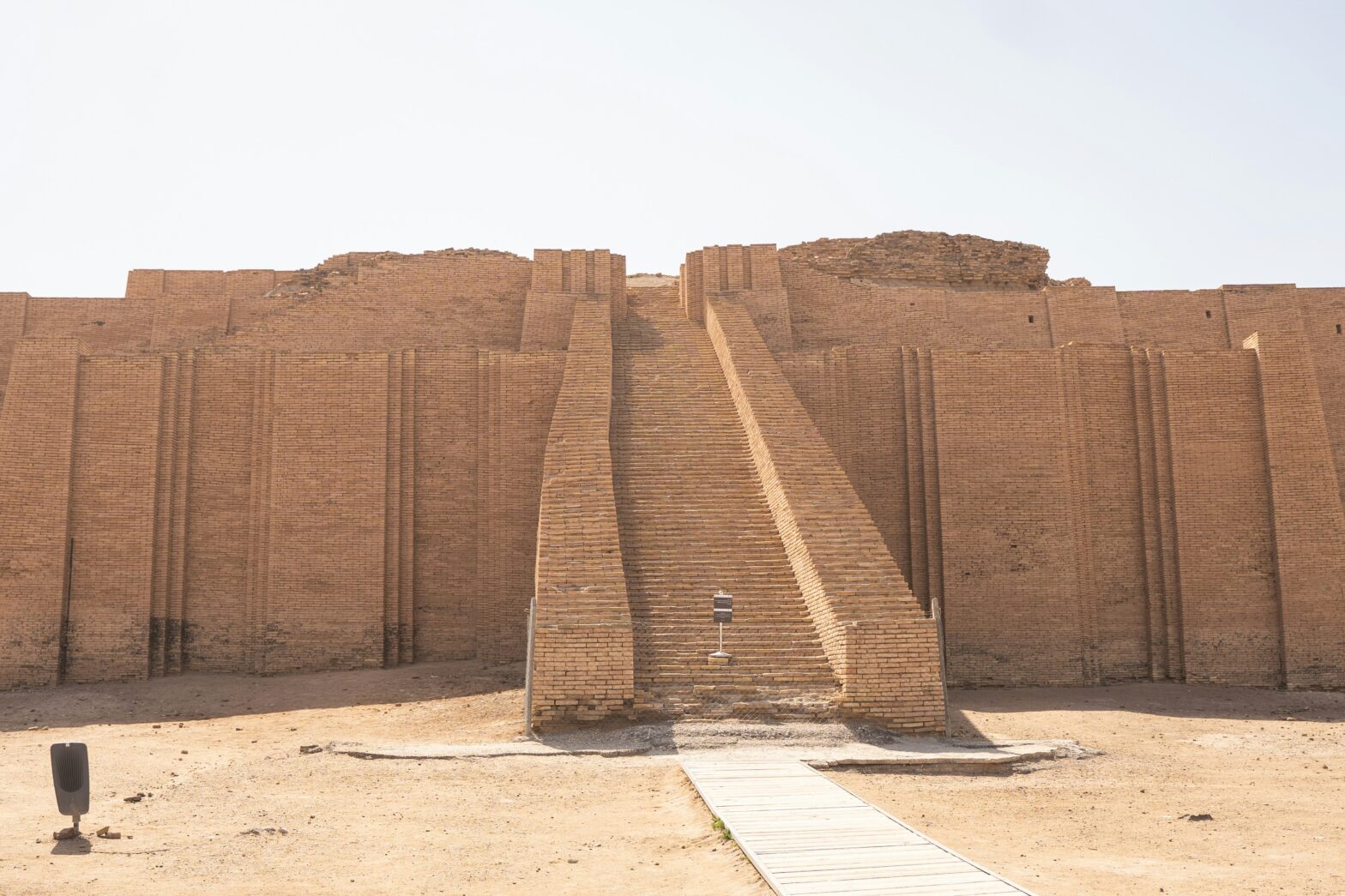
Why does the Holy Spirit inspire Moses to record the construction materials? Because it represents a shift in human reliance. In Canaan and the hill country, men built with stone—materials God created, hewn from the earth. But in the alluvial plain of Shinar, there is no stone. So, man invents his own. He creates bricks—uniform, man-made, and mass-produced. It is a triumph of technology. They are overcoming the limitations of their environment to build a world of their own making.
The Manifesto of Pride
With their new technology, they reveal their intent. “Then they said, ‘Come, let us build ourselves a city and a tower with its top in the heavens…'”
This tower (likely a ziggurat) was not designed to physically reach God’s throne in outer space; they were not that naive. It was a religious structure, a man-made mountain designed to bring the “heavens” down to them on their terms. It was a temple of human ascent.
Their motivation is twofold, and it reveals the heart of all secularism.
First, a thirst for glory: “…and let us make a name for ourselves.” In Genesis 4:26, the godly line “called upon the name of the LORD.” Here, the ungodly line wants to make a name for themselves. They are stealing glory that belongs to God.
Second, a fear of insignificance and obedience: “…lest we be dispersed over the face of the whole earth.” God’s command to Noah was to “fill the earth” (Gen. 9:1). These people are congregating to avoid filling the earth. They are seeking security in centralization, refusing to trust God’s command to go out into the world. They want a localized, human-controlled security.
Verses 5-6
5 And the Lord came down to see the city and the tower, which the children of man had built. 6 And the Lord said, “Behold, they are one people, and they have all one language, and this is only the beginning of what they will do. And nothing that they propose to do will now be impossible for them.
The Irony of God’s View
The narrative structure here is masterful. The humans say, “Come, let us build up.” Verse 5 responds with crushing irony: “And the LORD came down to see the city and the tower, which the children of man had built.”
Do you see the humor the author intends for you to catch? They thought their tower reached the heavens. They thought it was impressive. But from God’s perspective, it is so microscopic that He has to “come down” just to see it. The greatest monument of human achievement is a speck to the Creator.
The text also calls them “the children of man” (bene ha-adam). They wanted to be gods, making a name for themselves. God reminds them they are just sons of Adam—dust, frail, and fallen.
The Danger of Godless Unity
God’s assessment is chilling. “And the LORD said, ‘Behold, they are one people, and they have all one language, and this is only the beginning of what they will do. And nothing that they propose to do will now be impossible for them.'”
This is not God trembling that man might overthrow Him. This is a Father recognizing that a toddler with a loaded gun is dangerous to himself and others. If fallen humanity remains perfectly united, with one language and common purpose, there is no limit to the evil they can systematize. A united, godless humanity is a totalitarian nightmare. They will reinforce each other’s rebellion until repentance becomes impossible.
Verses 7-9
7 Come, let us go down and there confuse their language, so that they may not understand one another’s speech.” 8 So the Lord dispersed them from there over the face of all the earth, and they left off building the city. 9 Therefore its name was called Babel, because there the Lord confused the language of all the earth. And from there the Lord dispersed them over the face of all the earth.
The Trinitarian Council
God resolves to act. “Come, let us go down and there confuse their language, so that they may not understand one another’s speech.”
Just as in the creation of man (“Let us make man,” Gen. 1:26), God speaks in the plural, hinting at the richness of His triune nature. The judgment He selects is brilliant in its simplicity. He does not send fire or flood; He sends confusion. He attacks their communication. By breaking their language, He breaks their unity. The great project grinds to a halt not because of an external army, but because they can no longer cooperate in their rebellion.
The Dispersion
The result is exactly what they feared, but it comes from the hand of God. “So the LORD dispersed them from there over the face of all the earth, and they left off building the city.”
This dispersion is a judgment, yes, but you must also see it as a severe mercy. By scattering them, God forces them to obey the Creation Mandate they had rejected (“fill the earth”). He checks their power. He creates a system of checks and balances among nations so that no single human empire can ever again claim total dominion over the souls of men.
The Name of Shame
The account ends with a final note on the legacy of their project. “Therefore its name was called Babel, because there the LORD confused the language of all the earth. And from there the LORD dispersed them over the face of all the earth.”
They wanted to make a “name” (Hebrew shem) for themselves. They wanted a name of glory, stability, and renown. Instead, God gave them the name Babel, which sounds like the Hebrew word for “confused.” Their monument to human glory became a monument to human folly.
Conclusion
Genesis 11 is the funeral of the City of Man. It teaches us that any culture, government, or ministry that seeks to build unity without truth, or security without obedience, is doomed to confusion. We cannot build a stairway to heaven; we cannot make a name for ourselves that will last.
But this is not the end of the story. The very next chapter will introduce a man named Abram. And to this man, God will make a startling promise: “I will make your name great” (Gen. 12:2). Do you see the connection? At Babel, men tried to seize a great name and ended in shame. In Abraham, God freely gives a great name to a man who trusts Him.
Furthermore, the confusion of Babel is not the final word. In the New Testament, at Pentecost, the Lord comes down again. But this time, He pours out His Spirit, and people from every nation hear the mighty works of God in their own tongues (Acts 2). Babel shattered humanity into different languages to restrain sin; the Gospel unites humanity across different languages to proclaim grace. The tower failed, but the Cross succeeds.
Key Terms
- Ziggurat: A massive stepped tower structure common in ancient Mesopotamia (Shinar), built as a temple complex. It was designed not as a tomb (like a pyramid) but as a stairway for the gods to descend and for man to ascend—a “gate of the gods” (Bab-ilu).
- Shinar: The biblical name for the region of Babylonia. In Scripture, it represents the geographical and spiritual center of human rebellion and false worship (Zech. 5:11; Dan. 1:2).
- Humanism: A worldview that places humanity at the center of all things, asserting that human reason and collective effort can solve all problems and achieve utopia without reliance on God. Babel is the first organized expression of this philosophy.
- The Name (Shem): In the Bible, a “name” represents identity, character, and destiny. The conflict of Genesis 11 is between man seeking to construct his own identity (autonomy) and God assigning identity (sovereignty).
- Pentecost: The event in Acts 2 where the Holy Spirit reversed the curse of Babel. While Babel scattered men by confusing languages to judge pride, Pentecost united men of different languages in the understanding of the Gospel, creating a new, holy humanity in Christ.
Awesome Tony