In the previous chapter, we traced the agonizing, magnificent survival of the Old Testament church. Despite the relentless rebellion of Israel, the devastation of the exile, and the fierce assaults of Satan, God sovereignly preserved the promised seed line. All of that history, the wars, the prophets, the tabernacle, and the waiting, was building toward… Continue reading Very God and Very Man: On the Incarnation (Scots Confession, Chapter 6)
Category: Systematic Theology
The Unstoppable Lord: Divine Omnipotence and Sovereign Power

We live in a world obsessed with power yet constantly frustrated by its limitations. In creaturely life, power is always fragile, finite, and contested. An earthly empire amasses legions and battleships, only to collapse from economic decay or internal corruption. A brilliant surgeon exhausts all her skill, only to lose the patient on the operating… Continue reading The Unstoppable Lord: Divine Omnipotence and Sovereign Power
Unbound Reality: Divine Omnipresence, Eternity, and Infinity

We live in a world defined and constrained by borders. Every creaturely reality exists within the twin coordinates of space and time. You can only be in one physical location at any given moment, and your life unfolds along an unyielding, linear timeline: seconds tick away into minutes, past moments slip beyond reach, and the… Continue reading Unbound Reality: Divine Omnipresence, Eternity, and Infinity
The Unchanging Rock: Reclaiming Divine Impassibility
We live in an age that equates love with emotional vulnerability. In our modern, psychologized world, authenticity is measured by how deeply an individual can be wounded by others, how openly they display emotional volatility, and how intensely they enter into shared distress. To love someone, we are told, means allowing our emotional equilibrium to… Continue reading The Unchanging Rock: Reclaiming Divine Impassibility
Utterly Defaced: On Original Sin (Scots Confession, Chapter 3)
In the previous chapter of the Scots Confession, we looked at the breathtaking heights of early humanity and the catastrophic plunge of the Fall. Adam and Eve were created in pristine perfection, shining with the image of God. However, through a willful and cosmic conspiracy against the Sovereign Lord, they plummeted into ruin. If Chapter… Continue reading Utterly Defaced: On Original Sin (Scots Confession, Chapter 3)
The Self-Sufficient Source: Reclaiming Divine Aseity
We live in a culture dominated by transactional relationships. From our economic transactions to our social media networks, every connection in creaturely life involves mutual need, exchange, and dependence. We seek out friends who validate our identity, elect leaders who promise to fulfill our needs, and join communities to fill the empty places in our… Continue reading The Self-Sufficient Source: Reclaiming Divine Aseity
Image and Treason: On the Creation and Fall of Man (Scots Confession, Chapter 2)
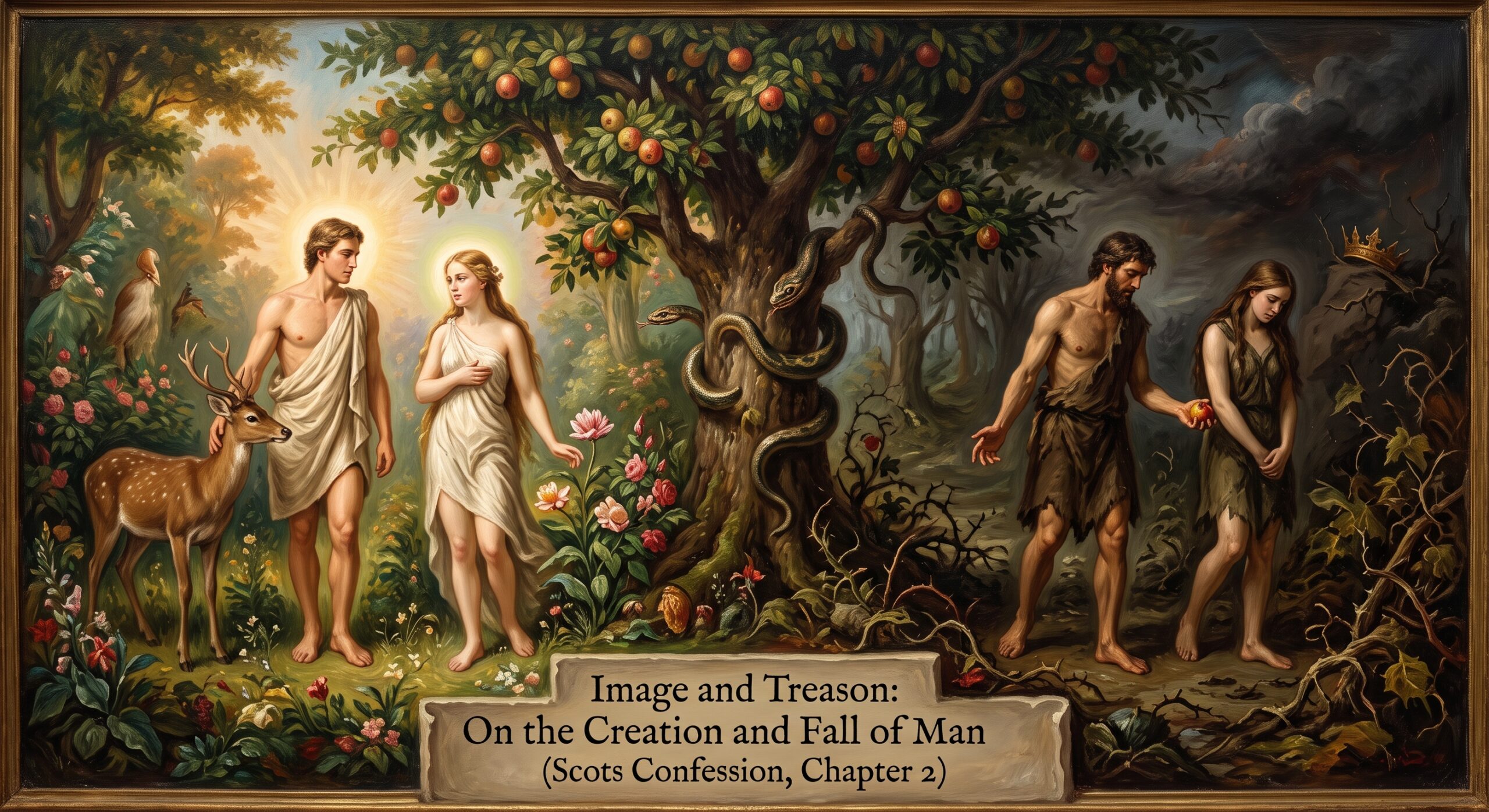
In the opening chapter of the Scots Confession, the Reformers fixed our eyes on the incomprehensible majesty of the Triune God. Having established the Creator, they immediately pivot in Chapter 2 to the pinnacle of His earthly creation. In a single, breathtaking paragraph, the “Six Johns” cover the entire trajectory of early human history. They… Continue reading Image and Treason: On the Creation and Fall of Man (Scots Confession, Chapter 2)
The Indivisible Essence: Reclaiming Divine Simplicity
We live in a world defined by composition. Everything in our creaturely experience is made up of parts. A physical body is composed of organs, tissues, and cells; a molecule is assembled from atoms; a clock is built from gears, springs, and levers. In our finite environment, complexity is often equated with greatness. We admire… Continue reading The Indivisible Essence: Reclaiming Divine Simplicity
The Majesty of the Triune God: An Introduction to Theology Proper
We live in a culture that has thoroughly domesticated the divine. In contemporary religion, God is frequently painted as an indulgent grandfather, a cosmic therapist, or a useful political ally who exists primarily to validate our desires and cushion our personal comfort. Even within conservative evangelicalism, we often speak of God with a breezy, casual… Continue reading The Majesty of the Triune God: An Introduction to Theology Proper
The Internal Witness: The Work of the Holy Spirit as the Principle of Knowing (Principium Cognoscendi Internum)
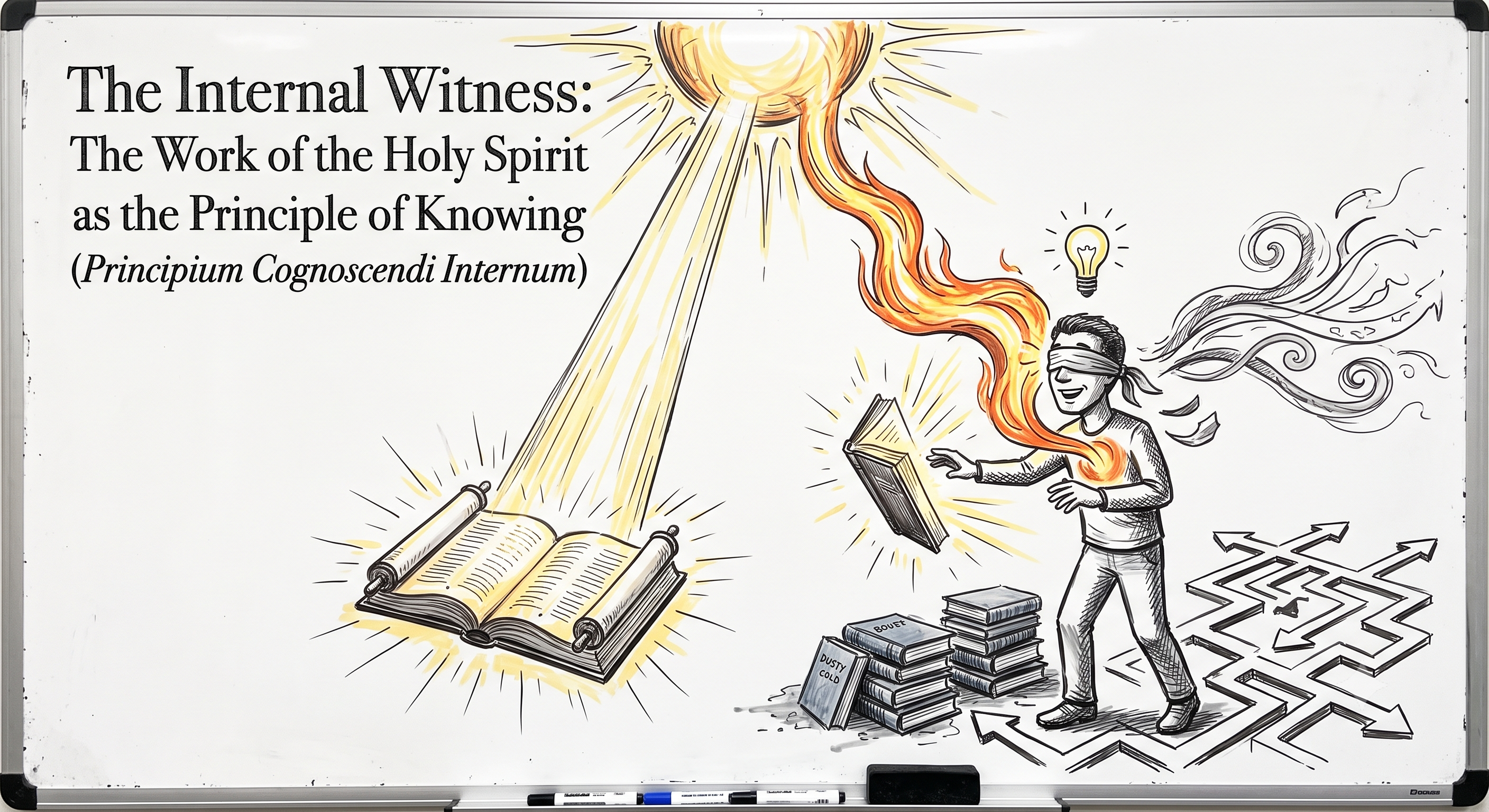
We can possess the most flawless, mathematically precise theological library in the world and remain completely dead in our sins. We can memorize the historic confessions, master the nuances of Latin terminology, construct airtight defenses of biblical inerrancy, and win every online debate we enter, while our hearts remain as cold and lifeless as marble… Continue reading The Internal Witness: The Work of the Holy Spirit as the Principle of Knowing (Principium Cognoscendi Internum)