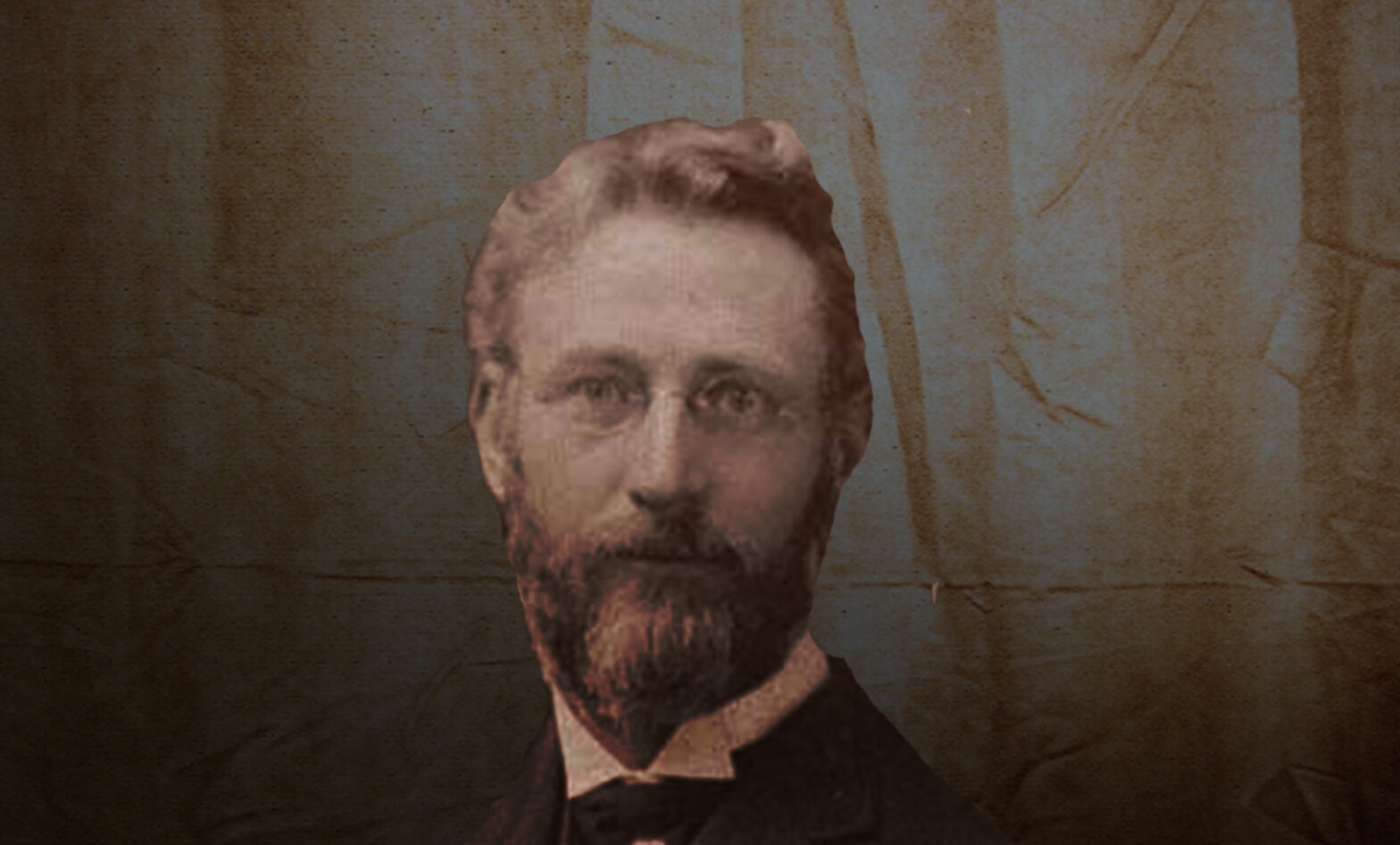
Having examined Augustine and Hodge, we turn now to Geerhardus Vos, the father of Reformed Biblical Theology. Vos is a giant of the faith, known for his deep insight into the eschatological structure of Scripture. Owen Strachan appeals to Vos to demonstrate that the Reformed tradition has always held to the Son’s submission.
However, Strachan’s use of Vos reveals a fundamental flaw in his research methodology. Reformed Dogmatics is written in a catechetical (Q&A) format. It is sequential and modular. Concepts introduced in early questions (like Question 12) are defined and elaborated upon in later questions (like Question 26 and following).
To pluck a summary statement from the beginning of the chapter without reading the definitions that follow is the kind of research one expects from a freshman theology paper, not a scholar with a doctorate. When we read the whole chapter, the ERAS argument evaporates.
The Forensic Evidence: The Ellipsis and the Definition
Strachan cites Question 12 from Vos’s Reformed Dogmatics to argue for a “subordination as to personal manner of existence.” He writes:
Although these three persons possess one and the same divine substance, Scripture nevertheless teaches that, concerning their personal existence, the Father is the first, the Son the second, and the Holy Spirit the third . . . . There is, therefore, subordination as to personal manner of existence and manner of working, but no subordination regarding possession of the one divine substance.” Vos, Reformed Dogmatics, translated and edited by Richard B Gaffin, Jr. (Bellingham, Washington: Lexham Press, 2012-2014, from hand-written lectures in 1896), vol. 1, p. 43.[1]
Notice the ellipsis “. . . .” in the middle of the quote. What is omitted?
In the full text, Vos writes this in the ellipsis:
that the Son is of the Father, the Spirit of the Father and the Son. Further, their workings outwardly reflect this order of personal existence, since the Father works through the Son, and the Father and Son work through the Spirit.[2]
The ellipsis hides the definition. Vos defines “manner of existence” not as rank or authority, but as origin (“the Son is of the Father”). He defines “manner of working” not as command and obedience, but as order of operation (“Father works through the Son”).
Reading the Whole Chapter: Causality, Not Authority
If Strachan had read past Question 12, he would have found that Vos explicitly defines the relationship between Father and Son in terms of causality, not authority.
In Question 35, Vos asks: “In what does the true meaning of these names [Father and Son] reside?” He answers: “In the concept of causality. The Father is called Father and the Son, Son because the former is the cause of the personal existence of the latter.”[3]
In Question 47, Vos summarizes the relationship: “a) The relationship between Father and Son is one of causality… c) It is a relationship of equality of persons.”[4]
Vos is rigorously consistent. The “subordination” he speaks of is the subordination of a stream to a fountain—order of origin. It is strictly causal (in the eternal generation sense), not governmental.
The Pactum Salutis: Where Submission Actually Lives
The most devastating refutation of Strachan’s reading comes when Vos addresses the Son’s submission in the work of redemption. ERAS proponents locate this submission in the Son’s eternal nature. Vos locates it in the Counsel of Peace (Pactum Salutis).
In Question 64, explaining Philippians 2:6, Vos writes:
In the order of persons, however, He was the Second Person, so that in the counsel of peace it fell to Him to be the Surety… As the second person He submitted to this second work… and thereby has become the great example of self-denial.[5]
Vos argues that it was appropriate for the Son to take the role of Surety because of his position as Second Person, but the submission itself is a voluntary assumption of a role within the Covenant of Redemption.
An Eternal Covenant, But an Economic Work
It is crucial here to understand a distinction that ERAS often collapses. The Counsel of Peace (or Covenant of Redemption) occurs in eternity past, before creation. However, it is still fundamentally concerned with the opera ad extra—the external works of God.
Even though the agreement is eternal, it is an agreement about what the Persons will do in the economy of redemption. It is not a description of how they relate to one another intrinsically in their shared life as God.
- Intrinsic Relation (Ad Intra): The Father begets the Son. This is necessary and eternal. There is no submission here, only procession.
- Covenantal Relation (Ad Extra): The Father and Son agree that the Son will become the Surety. This is voluntary and teleological (aimed at a goal: redemption).
When Vos speaks of the Son “submitting,” he is speaking of this covenantal agreement. The Son agrees to take on a role ad extra (for us and our salvation). He does not submit because he is ad intra (in himself) a subordinate person.
To confuse the eternal timing of the covenant with the eternal nature of the Son is a category error. Just because the decision was made in eternity does not mean the submission is an attribute of his deity.
Conclusion
Strachan’s use of Vos is a textbook example of confirmation bias. He scanned the text for the word “subordination,” found it in Question 12, and stopped reading.
Had he read to Question 35, he would have seen “subordination” defined as causality. Had he read to Question 64, he would have seen submission grounded in the Pactum Salutis.
Vos teaches us that we can have a robust doctrine of the Son’s submission without reading it back into his eternal ontology. To cite him as a proponent of ERAS is to confuse the Covenant of Redemption (a voluntary agreement between equals regarding their external work) with Eternal Functional Subordination (an intrinsic authority structure defined by personhood).
Key Terms
- Causality: Vos’s preferred term for the relationship between Father and Son; the Father is the “cause” of the Son’s personal existence (eternal generation), implying origin, not superiority.
- Surety: One who takes responsibility for another’s debt or obligations; Christ is the Surety of the new covenant.
- Counsel of Peace (Pactum Salutis): The eternal covenant between the Father and Son to save the elect; for Vos, this is the context where the Son “submits” to the work of redemption.
- Ad Intra vs. Ad Extra: The distinction between God’s internal life (processions) and his external works (missions); the Covenant of Redemption belongs to the latter, even though it is planned eternally.
[1] Owen Strachan, “The Danger of Equating Eternal Authority & Submission with Arian Heresy,” Reenchant with Owen Strachan, 9 November 2021, https://owenstrachan.substack.com/p/the-danger-of-equating-eternal-authority.
[2] Geerhardus Vos, Reformed Dogmatics, ed. and trans. Richard Jr Gaffin, vol. 1 (Bellingham: Lexham Press, 2012), 43.
[3] Ibid., 55.
[4] Ibid., 59.
[5] Ibid. 64.