Loved ones, we have reached what many theologians consider the “Holy of Holies” of the Old Testament. In the previous chapter, Abram was a warrior-king, defeating eastern empires and receiving a blessing from Melchizedek. He had rejected the riches of Sodom, choosing to rely solely on the “Possessor of heaven and earth.”
But as the dust of battle settles, a cold reality sets in. Abram is an old man, living in a tent, surrounded by enemies, and most importantly—he is still childless. The promises of Chapter 12 and 13 seem to be mocking him. It is in this moment of vulnerability that God comes to him, not just with a word, but with a ritual. Genesis 15 is the formal ratification of the Abrahamic Covenant. It is here that we find the bedrock of the doctrine of Justification and the most staggering display of God’s unilateral commitment to His people.
Genesis 15:1-21 records the divine assurance given to a fearful Abram, the accounting of his faith as righteousness, and the ratification of the covenant through a self-maledictory oath where God alone passes through the pieces of sacrifice.
Verses 1-6
1 After these things the word of the Lord came to Abram in a vision: “Fear not, Abram, I am your shield; your reward shall be very great.” 2 But Abram said, “O Lord God, what will you give me, for I continue childless, and the heir of my house is Eliezer of Damascus?” 3 And Abram said, “Behold, you have given me no offspring, and a member of my household will be my heir.” 4 And behold, the word of the Lord came to him: “This man shall not be your heir; your very own son shall be your heir.” 5 And he brought him outside and said, “Look toward heaven, and number the stars, if you are able to number them.” Then he said to him, “So shall your offspring be.” 6 And he believed the Lord, and he counted it to him as righteousness.
Shield, Reward, and the Star-Promise
The chapter opens with a vision: “After these things the word of the LORD came to Abram in a vision: ‘Fear not, Abram, I am your shield; your reward shall be very great.'” God addresses Abram’s two greatest needs: protection from the kings he just defeated (“shield”) and the wealth he rejected from Sodom (“reward”).
But Abram’s heart is elsewhere. “O Lord GOD, what will you give me, for I continue childless… a member of my household will be my heir.” He is essentially saying, “What good is a shield or a reward if I have no son to pass it to?” God’s answer is a direct, physical experience: “He brought him outside and said, ‘Look toward heaven, and number the stars, if you are able to number them.’ Then he said to him, ‘So shall your offspring be.'”
Counted as Righteousness
Then comes verse 6—the verse that serves as the heart of the New Testament’s teaching on salvation (Romans 4; Galatians 3). “And he believed the LORD, and he counted it to him as righteousness.”
You must observe the sequence here. Abram does not become righteous by his own works; he is counted as righteous because he believes the promise of God. This is the Imputation of Righteousness. Abram trusts the God who justifies the ungodly, and God credits Abram’s faith to his account as if he had never sinned. This is the Gospel in the middle of Genesis.
Verses 7-11
7 And he said to him, “I am the Lord who brought you out from Ur of the Chaldeans to give you this land to possess.” 8But he said, “O Lord God, how am I to know that I shall possess it?” 9 He said to him, “Bring me a heifer three years old, a female goat three years old, a ram three years old, a turtledove, and a young pigeon.” 10 And he brought him all these, cut them in half, and laid each half over against the other. But he did not cut the birds in half. 11 And when birds of prey came down on the carcasses, Abram drove them away.
The Question of Assurance
God reminds Abram of his journey: “I am the LORD who brought you out from Ur of the Chaldeans to give you this land to possess.” Abram, still human and struggling with the weight of time, asks: “O Lord GOD, how am I to know that I shall possess it?”
Abram is not asking for proof of God’s existence, but for a formal guarantee. God responds by commanding a sacrifice: “Bring me a heifer… a female goat… a ram… a turtledove, and a young pigeon.” Abram cuts the animals in half and lays them opposite each other, creating a path of blood between them.
Verses 12-16
12 As the sun was going down, a deep sleep fell on Abram. And behold, dreadful and great darkness fell upon him. 13Then the Lord said to Abram, “Know for certain that your offspring will be sojourners in a land that is not theirs and will be servants there, and they will be afflicted for four hundred years. 14 But I will bring judgment on the nation that they serve, and afterward they shall come out with great possessions. 15 As for you, you shall go to your fathers in peace; you shall be buried in a good old age. 16 And they shall come back here in the fourth generation, for the iniquity of the Amorites is not yet complete.”
The Darkness and the Prophecy
As a “dreadful and great darkness” falls upon Abram, God reveals the future. The promise of land does not mean an immediate, easy life. “Know for certain that your offspring will be sojourners in a land that is not theirs… and they will be afflicted for four hundred years.”
This is a prophecy of the Egyptian bondage. But it is framed by divine sovereignty. God will judge that nation, and Israel will come out with “great possessions.” Why the delay? Because “the iniquity of the Amorites is not yet complete.” This teaches you a vital lesson about God’s justice: He is patient even with His enemies, waiting until their sin has reached its full measure before bringing the sword of judgment.
Verses 17-21
17 When the sun had gone down and it was dark, behold, a smoking fire pot and a flaming torch passed between these pieces. 18 On that day the Lord made a covenant with Abram, saying, “To your offspring I give this land, from the river of Egypt to the great river, the river Euphrates, 19 the land of the Kenites, the Kenizzites, the Kadmonites, 20 the Hittites, the Perizzites, the Rephaim, 21 the Amorites, the Canaanites, the Girgashites and the Jebusites.”
The Unilateral Oath
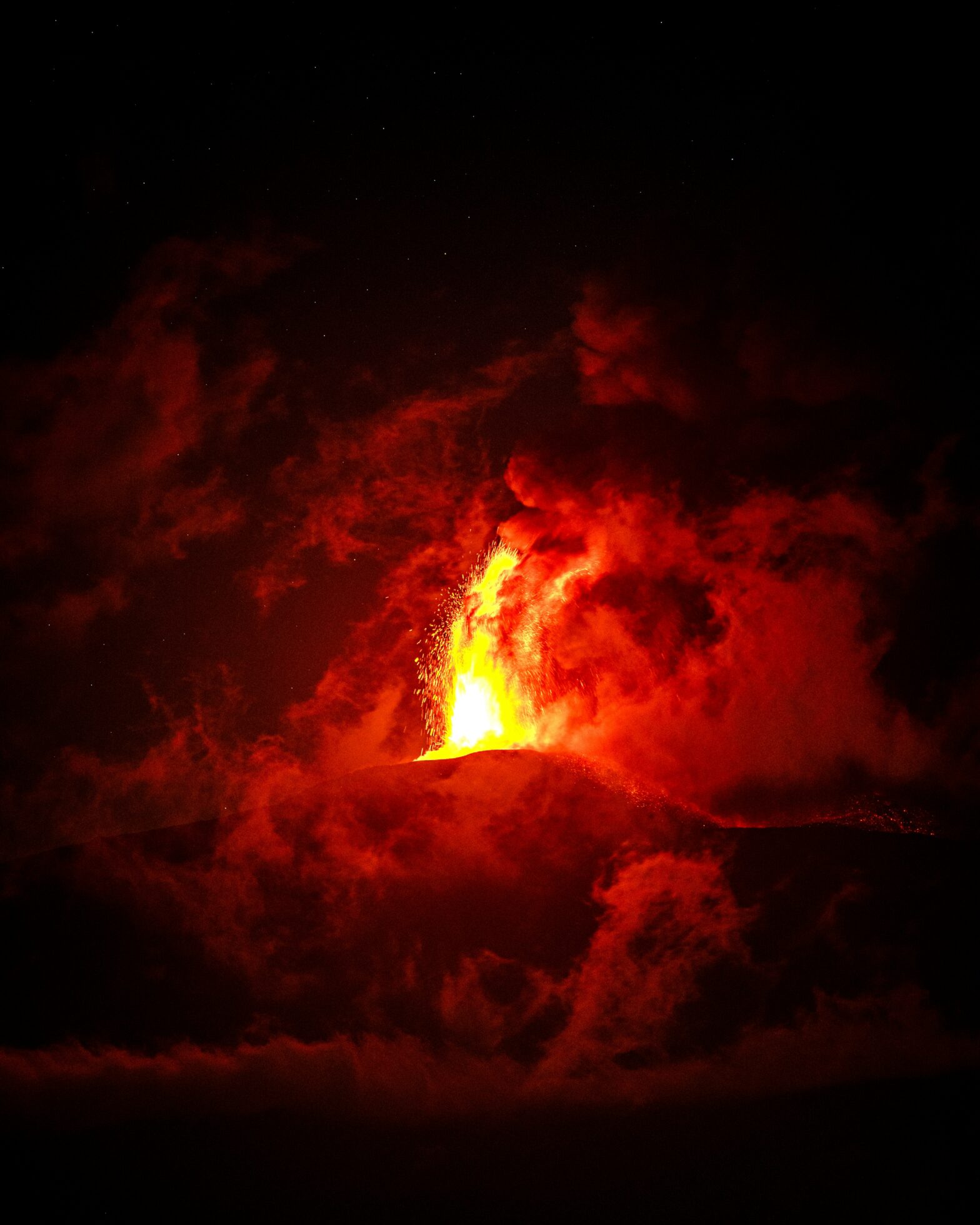
The climax of the chapter is one of the most significant scenes in the Bible. “When the sun had gone down and it was dark, behold, a smoking fire pot and a flaming torch passed between these pieces.”
To understand this, you must understand the “cutting of a covenant” (karat berit) in the ancient world. Usually, when two parties made a treaty, both would walk through the halved animals. By doing so, they were making a self-maledictory oath. They were saying, “If I break this covenant, may I be cut in pieces like these animals.”
But look at the text! Abram is in a deep sleep. He does not walk through the pieces. Instead, the “smoking fire pot and flaming torch”—symbols of the divine presence—pass through the pieces alone.
This is a unilateral covenant. God is saying to Abram, “If this covenant is broken, I will be the one to be cut in pieces.” God is taking the entire responsibility for the covenant’s fulfillment upon Himself. He is binding Himself to an oath of blood.
Conclusion
Genesis 15 is the foundation of our security. It teaches us that our standing with God depends not on our ability to walk the path of blood, but on God’s sovereign oath to do it for us.
When the smoking fire pot passed between those pieces, it pointed directly to the cross of Jesus Christ. Because we did break the covenant, the curse of the broken pieces had to fall on someone. On Calvary, the “Seed of Abraham” was “cut off” from the land of the living. Christ took the malediction of the oath upon Himself so that the blessing of the promise could come to us. Our righteousness is “counted” to us because our sin was “counted” to Him.
Key Terms
- Justification by Faith: The act of God whereby He declares a sinner to be righteous in His sight. Genesis 15:6 is the primary Old Testament text for this doctrine, showing that Abram’s right standing was based on faith in God’s promise, not his own performance.
- Imputation: A legal term meaning “to reckon” or “to credit to one’s account.” In this chapter, Abram’s faith is imputed to him as righteousness. In the Gospel, our sins are imputed to Christ, and His righteousness is imputed to us.
- Self-Maledictory Oath: A “curse upon oneself.” In the covenant ritual, passing through the animal pieces was a graphic way of saying “may I be destroyed if I fail to keep my word.”
- Unilateral Covenant: A covenant where the obligations and the oath are taken by one party alone. By passing through the pieces while Abram slept, God demonstrated that the fulfillment of the promise rests entirely on His own faithfulness.
- Theophany: A visible manifestation of God. The smoking fire pot and flaming torch represent God’s presence (recalling the pillar of cloud and fire in the Exodus), signifying that He is the one ratifying the treaty.