Loved ones, we left the last chapter with a grim picture. Cain, the first murderer, is condemned to be a fugitive and a wanderer on the earth, cursed from the very ground his brother’s blood had stained. Yet, he is also marked by God’s strange mercy, preserved from immediate vengeance. The question that hangs in the air is, what becomes of this man and his descendants? What kind of world will be built by a man who answered God’s call with a defiant sneer, “Am I my brother’s keeper?”
This next passage provides the answer. It is a tale of two humanities, two lineages that trace their origins back to Adam but choose radically different paths. On the one hand, we will see the line of Cain, which builds a civilization of impressive cultural achievement, technological prowess, and arrogant self-sufficiency—a city of man. On the other, we see the line of Seth, a fragile, replacement seed through whom humanity begins not to build its own name, but to call upon the name of the Lord. This is the genesis of the City of God.
Genesis 4:17-26 establishes the fundamental conflict of human history by contrasting the line of Cain—which builds a godless civilization defined by self-glorification, technological pride, and violent arrogance—with the line of Seth, a godly remnant that finds its identity not in human achievement but in humbly calling upon the name of the Lord.
Verses 17-24: The City of Man
A Civilization of Wanderers
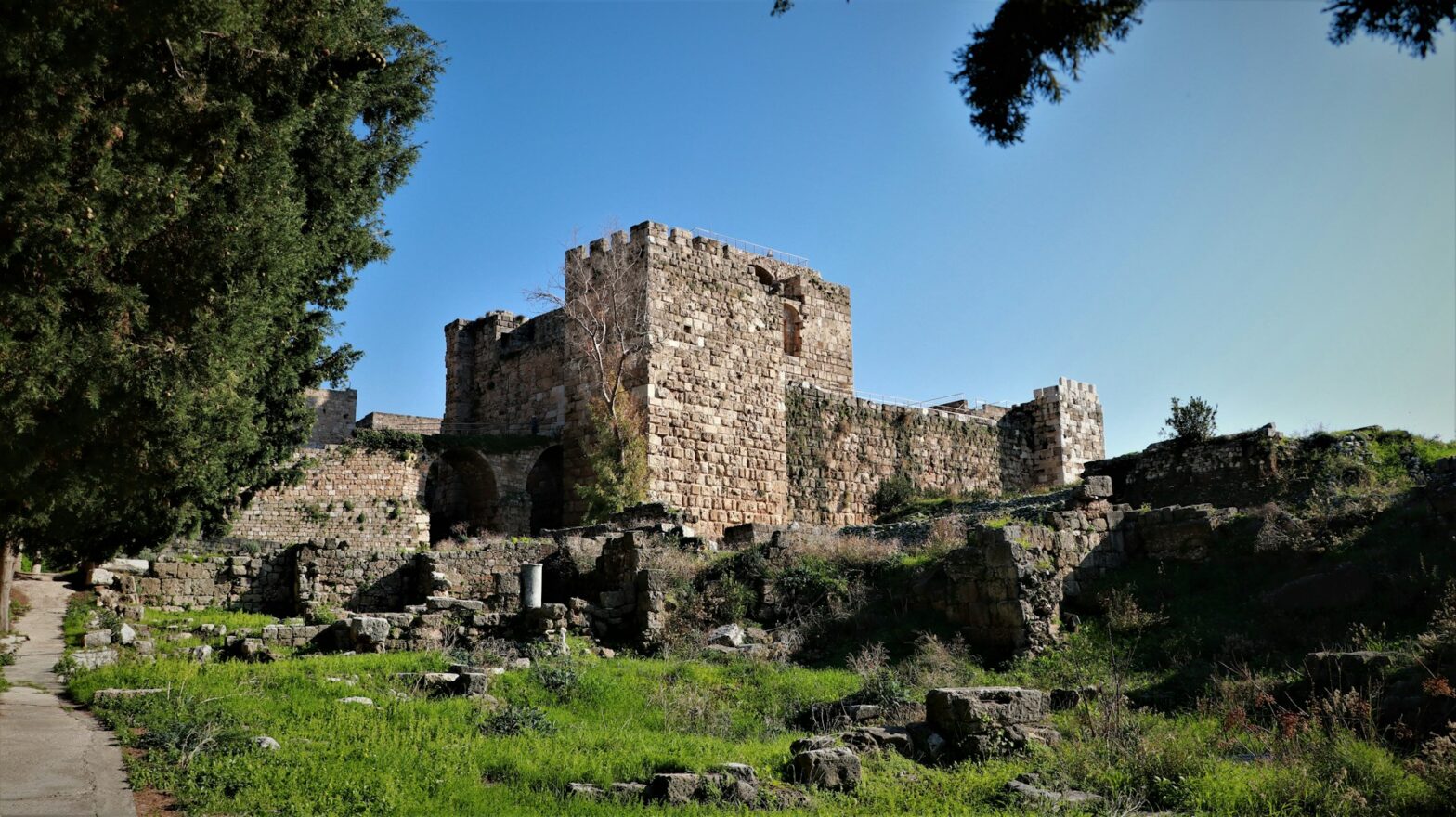
The first thing the wanderer Cain does is build a city. Here, the perspicuity of Scripture is on full display. When you read the text carefully, you see a profound act of rebellion. A man cursed to wander the earth defiantly sinks roots into the ground and builds a fortress of stability for himself. The text tells us, “When he built a city, he called the name of the city after the name of his son, Enoch.” This is an attempt to create a man-made Eden, a kingdom of his own making where he can find security and legacy apart from God. This is the archetypal act of the City of Man: to establish its own name and its own salvation through its own efforts.
The Fruits of a Godless Culture
Cain’s line flourishes. His descendants become pioneers of culture and technology. Jabal is called “the father of those who dwell in tents and have livestock.” His brother Jubal is “the father of all those who play the lyre and pipe.” Their half-brother Tubal-cain becomes “the forger of all instruments of bronze and iron”—tools for building, but also weapons for war.
We must be clear: animal husbandry, music, and technology are not inherently evil. They are good gifts, expressions of the creativity God instilled in humanity. The tragedy here is not what they built, but the foundation upon which they built it. This is a civilization that develops its powers entirely for its own glory, without any reference to the Giver of those gifts. It is a portrait of a humanity that is culturally advanced but spiritually dead.
The Song of the Sword
The line of Cain reaches its terrifying apex in Lamech. He is Cain squared. First, he shatters God’s design for marriage, revealed in Genesis 2, as the text states, “Lamech took two wives.” He is the first polygamist, treating women as property to aggrandize his own name.
Second, he authors one of the first recorded poems in the Bible, and it stands in stark, terrifying contrast to Adam’s first poem. Where Adam’s was a joyful celebration of companionship (Gen. 2:23), Lamech’s is a boastful “Song of the Sword” to his wives.
“Adah and Zillah, hear my voice;
you wives of Lamech, listen to what I say:
I have killed a man for wounding me,
a young man for striking me.
If Cain’s revenge is sevenfold,
then Lamech’s is seventy-sevenfold.”
This is not justice; it is disproportionate, vengeful brutality. He takes God’s promise of protection over Cain and twists it into a personal manifesto of terror. This is the ultimate expression of the City of Man: a culture that celebrates its own violence, worships its own power, and deifies its own name.
Verses 25-26: The City of God
A Child of Promise
Just as the arrogant song of Lamech fades, the narrative pivots to a quiet, hopeful note. Adam and Eve have another son. Eve’s words are full of faith. She names him Seth, “for she said, ‘God has appointed for me another offspring instead of Abel, for Cain killed him.'” Where Cain’s line is defined by what man builds, Seth’s line begins with what God appoints.
The Beginning of Worship
Seth has a son named Enosh. The name itself is significant, as it can mean “mortal” or “frail.” It suggests a posture of humility, a recognition of human weakness in stark contrast to the arrogant self-sufficiency of Cain’s descendants.
And then we read the most important line in the chapter: “At that time people began to call upon the name of the Lord.” This is the simple, profound activity of the City of God. They are not building cities, forging bronze, or composing songs of vengeance. They are gathering in public, corporate worship. While Lamech was making a name for himself, the line of Seth was calling upon the name of Yahweh. This is the birth of the church, the gathered community of faith, whose security is not in city walls but in the character of their Covenant-keeping God.
Conclusion
This chapter presents us with the great divergence of the human race. It is a tale of two cities, two humanities defined by what they worship. The City of Man, founded by Cain, is impressive. It is technologically advanced, culturally rich, and powerful. It seeks to make a name for itself and finds its security in its own achievements. But it is a city built on a foundation of rebellion, and its anthem is a song of violent pride.
The City of God, by contrast, seems fragile. It begins with a replacement son, a recognition of human mortality, and an act of dependent worship. It builds no monuments and boasts of no power. Its single defining act is to call upon the name of the Lord. This, loved ones, is the central conflict of history. It is the conflict between the seed of the serpent and the seed of the woman, between the city of self-glorification and the city of selfless worship. And as we continue our walk through the Word, we will see this tale of two cities play out on every page, culminating in the final contrast between the great city, Babylon, and the New Jerusalem, the holy city of God.
Key Terms & Concepts
- Two Cities: A theological framework (famously articulated by Augustine of Hippo) for understanding human history as an ongoing conflict between two spiritual communities: the City of Man (defined by self-love that leads to contempt of God) and the City of God (defined by a love for God that leads to contempt of self).
- Polygamy: The practice of having more than one wife at the same time. Lamech is the first polygamist recorded in the Bible, representing a direct violation of God’s created intention for marriage as a lifelong union between one man and one woman (Gen. 2:24).
- Godly Line/Seed: The lineage through which God’s redemptive promises are preserved and transmitted. It begins here with Seth, is distinguished by its faithful worship of God, and continues through the patriarchs to its ultimate fulfillment in Jesus Christ.
- Secularism: A worldview that builds its culture, ethics, and hopes entirely on human reason and achievement, without reference to God. The line of Cain provides the biblical archetype for a purely secular civilization, showcasing both its cultural potential and its spiritual bankruptcy.
- Calling on the Name of the Lord: A biblical phrase signifying public, corporate, and covenantal worship. It represents a community that finds