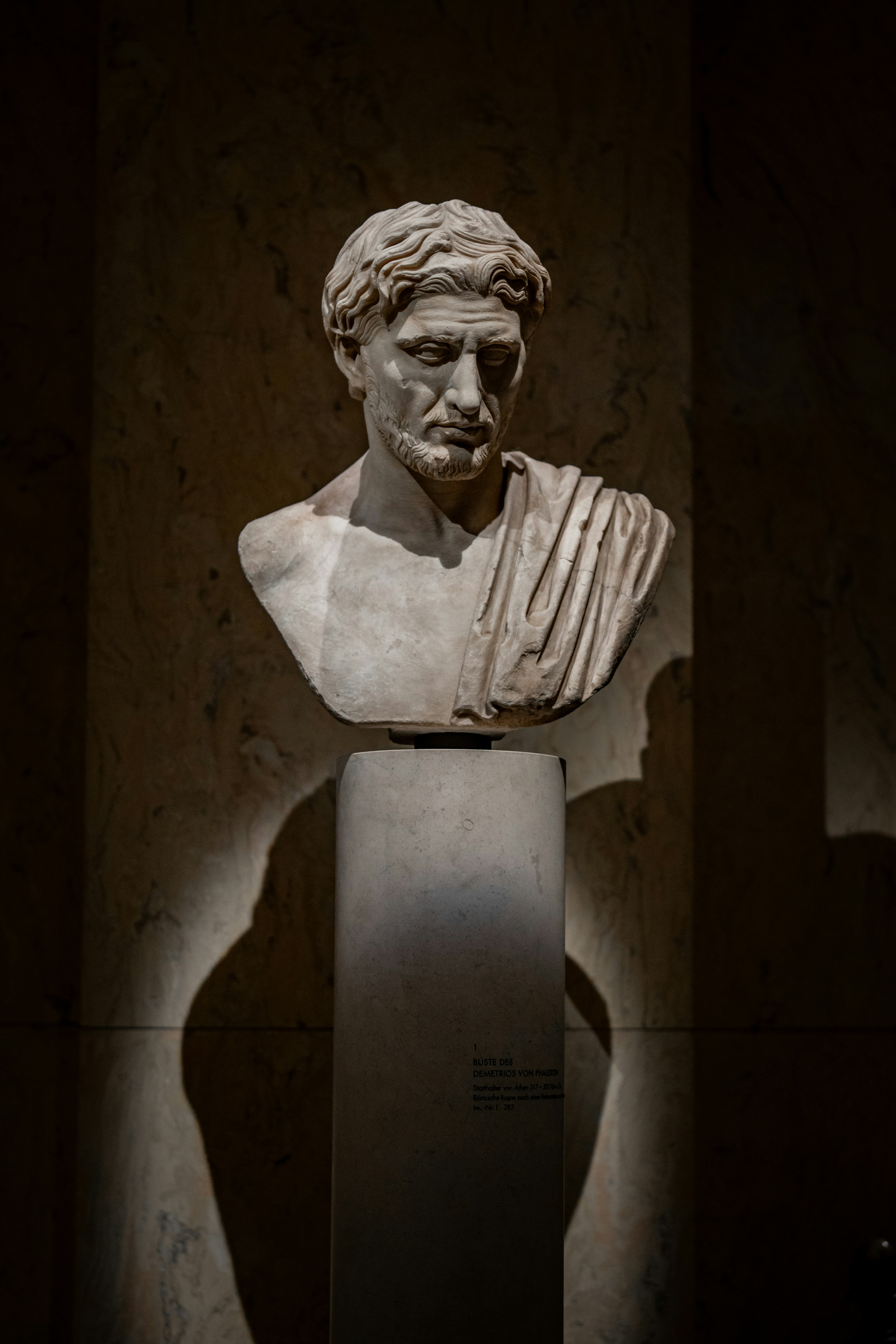
We have spent much of this series dealing with the ideas of Stoicism—the Logos, the Dichotomy of Control, the goal of Tranquility. But philosophies do not float in the ether; they are lived by men. And few men lived the Stoic philosophy with as much brilliance, contradiction, and tragedy as Lucius Annaeus Seneca (c. 4 BC – AD 65).
Seneca is the most accessible of the Roman Stoics. His Letters to Lucilius read like modern blog posts—punchy, witty, and devastatingly practical. He writes about noise, asthma, slavery, and dinner parties. The early church fathers were so impressed by his moral insights that a legend developed claiming he secretly corresponded with the Apostle Paul. Tertullian famously called him “Seneca, often ours.”
But Seneca was also a man of deep shadows. He was the tutor and advisor to the tyrant Nero. He preached the virtues of poverty while amassing a fortune that would rival a modern billionaire. He praised the simple life while hosting lavish banquets.
For the Christian Stoic, Seneca is the ultimate case study. He represents the absolute peak of what human wisdom can achieve without the Gospel—and the absolute depth of its failure.
Seneca serves as a potent illustration of the value and limits of common grace; his writings offer profound practical wisdom on time, anger, and adversity, yet his life demonstrates the tragic inability of moral philosophy to regenerate the human heart or cleanse the conscience.
The Gold: Wisdom from the Porch
When we “plunder the Egyptians,” Seneca is the treasure house. His insights into human psychology and behavior are often startlingly biblical. We should read him, and we should learn from him.
On the Shortness of Life
In his famous essay De Brevitate Vitae, Seneca diagnoses the human problem with time. ” It is not that we have a short space of time,” he writes, ” but that we waste much of it.”[1] He rebukes men who toil for decades to acquire wealth, only to realize at the end that they never actually lived.
- The Biblical Truth: Seneca here echoes the ancient wisdom of Psalm 90: “So teach us to number our days that we may get a heart of wisdom.” He recognized the value of the time God has given, even without knowing the Giver.
On the Madness of Anger
Seneca wrote an entire treatise On Anger (De Ira). He argues that anger is a temporary madness that serves no useful purpose. He advises delay: ” The greatest remedy for anger is delay.”[2]
- The Biblical Truth: This aligns with James 1:19, which commands us to be “slow to anger.” Seneca provides practical tools that can assist in fulfilling this biblical command, using common grace insights to cool the temper.
On the Dignity of Others
In Letter 47, Seneca writes about slaves in a way that was revolutionary for his time. “‘They are slaves,’ people declare. Nay, rather they are men.” He urged kindness and recognized the shared humanity of master and servant.
- The Biblical Truth: While he did not attack the institution of slavery, his recognition of shared humanity reflects the Imago Dei—a reality fully revealed in Paul’s instruction to masters in Ephesians 6:9.
The Dross: The Failure of the Moralist
However, when we read Seneca, we must read him with the light of the Cross shining on the page. For all his brilliance, Seneca was a failure.
He was the “Prime Minister” of Rome during the early years of Nero. He tried to use Stoic philosophy to tame a sociopath. He failed. He ended up complicit in Nero’s crimes, writing the speech justifying the murder of Nero’s mother, Agrippina.
Seneca proves, once and for all, that Education is not Regeneration.
- You can know the good (Wisdom).
- You can write beautifully about the good (Eloquence).
- You can even desire the good (Will).
- But you cannot be good without Grace.
Seneca is the embodiment of Romans 7: “For I have the desire to do what is right, but not the ability to carry it out.” He was a physician who could diagnose every disease of the human soul but could cure none—not even his own.
The Christian Pivot: A Schoolmaster to Christ
So, how do we read him? We read him not as a savior, but as a schoolmaster.
When Seneca writes about the wretchedness of a guilty conscience, he is preparing the reader for the doctrine of Atonement. When he writes about the difficulty of virtue, he is preparing the reader for the necessity of the Spirit.
The Suicide vs. The Sacrifice
The contrast is sharpest in their deaths.
- Seneca died by forced suicide (ordered by Nero). He opened his veins in a warm bath, dictating philosophy to his scribes until the end. It was a staged, theatrical performance of self-mastery. He died seeking to prove his own virtue.
- Jesus died by public execution. He bled on a rough cross, crying out in agony. He died not to prove His virtue, but to pay for our lack of virtue.
Seneca’s death says, “Look at me; see how strong a man can be.”
Christ’s death says, “Look at Me; see how much God loves weak men.”
Conclusion: Admire the Diagnosis, Reject the Cure
We should have Seneca on our bookshelves. He is a brilliant uncle who gives excellent advice on money, time management, and dealing with difficult people. He challenges our laziness. He mocks our vanity.
But when the sky turns black and the weight of our sin crushes us, Seneca has nothing to say. He cannot wash a guilty conscience. He cannot raise the dead.
We read Seneca to learn how to live in the world. We go to Christ to learn how to live forever.
Read Seneca. Let his sharp wit cut through your excuses. Let his discipline shame your sloth. But never let him take the throne. He is a moral master, but he is not the Master.
In our final article, we will bring everything together. We will sketch the portrait of the Christian Stoic Man—a man who uses the tools of the Porch to build the Kingdom of the Cross.
Key Terms
- De Brevitate Vitae: (“On the Shortness of Life”). Seneca’s famous essay arguing that life is long enough if we manage our time wisely, but that most men waste it on trivialities (indifferents) and thus feel short-changed at death.
- De Ira: (“On Anger”). Seneca’s treatise analyzing anger as a destructive, irrational passion and offering practical cognitive strategies for suppressing and controlling it.
- Moralism: The attempt to achieve righteousness or right standing with God/man through human effort, discipline, and adherence to ethical rules, apart from the grace of God. Seneca is the quintessential moralist.
- Common Grace: The doctrine that God gives gifts of wisdom, restraint, and insight to unregenerate men (like Seneca) for the good of society, even though these gifts do not lead to salvation.
[1] Seneca, On the Shortness of Life, trans. John Basore (William Heinemann, 1932), 1.
[2] Seneca and Aubrey Stewart, Of Anger (London: George Bell and Sons, 1900), 2.29.