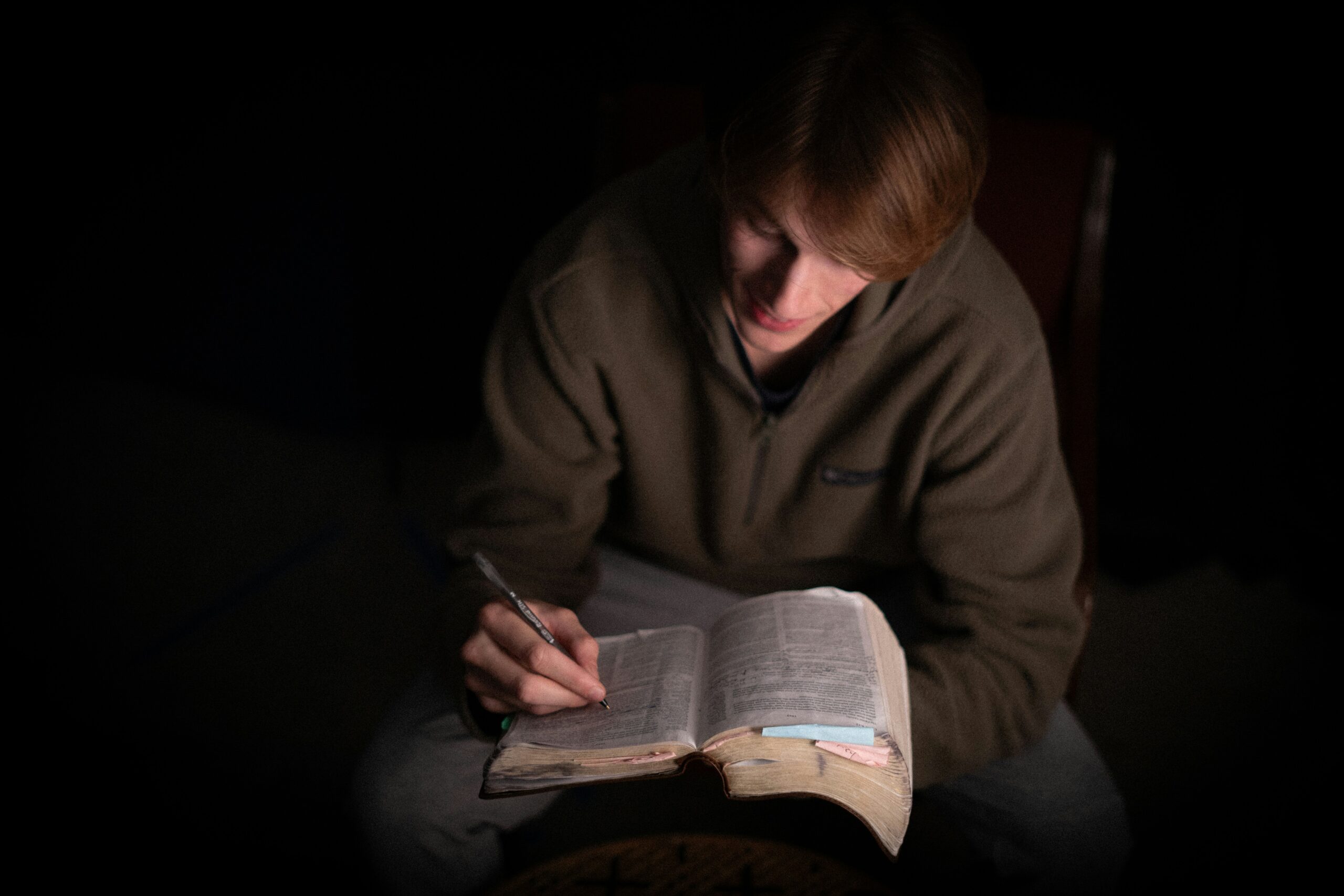
“The unexamined life is not worth living.” Socrates spoke these words at his trial, and the Stoics took them as a fundamental command. To live well, a man must pay attention to how he lives. He cannot drift. He must audit his own soul.
The primary tool the Stoics used for this audit was the diary. As we saw in Article 21, the most famous text of antiquity, Marcus Aurelius’s Meditations, was never meant for publication. It was a private journal.
But Marcus was not unique. Seneca and Epictetus both taught that daily journaling was an indispensable practice for the philosopher. They treated the diary as an accounting ledger for the soul.
For the Christian Stoic, the daily journal is a vital tool, but it must be fundamentally reoriented. It must transition from a lonely audit of moral performance into a living dialogue with the Father—a daily discipline of preparation, confession, and the tracking of Providence.
The Stoic Audit: Examining the Ledger
Seneca gives us the clearest picture of how a Roman Stoic used his journal. In his treatise On Anger, he describes his evening routine:
I make use of this privilege, and daily plead my cause before myself: when the lamp is taken out of my sight, and my wife, who knows my habit, has ceased to talk, I pass the whole day in review before myself, and repeat all that I have said and done: I conceal nothing from myself, and omit nothing: for why should I be afraid of any of my shortcomings, when it is in my power to say, “I pardon you this time: see that you never do that anymore?[1]
Notice the mechanism. Seneca places himself on trial every night. He is the judge, the jury, and the defendant. He reviews his actions against the standard of Reason. Did he lose his temper? Did he overindulge?
This is incredibly practical. A man who does not review his mistakes is doomed to repeat them. But notice the glaring theological problem at the end of Seneca’s quote: “I forgive you.” The Stoic diary is a closed system. It is a monologue. The philosopher judges himself, and then the philosopher absolves himself.
The Danger of the Ledger
If a Christian simply adopts the Stoic journaling method without baptizing it, he will run into a spiritual brick wall. If your journal is merely a ledger of your moral successes and failures, it will produce one of two deadly results:
- Pharisaism: If you review your day and find that you were highly disciplined, patient, and productive, a purely moral journal will breed pride. You will close the notebook feeling justified by your own works.
- Despair: If you review your day and find that you snapped at your children, wasted time, and harbored lust, a purely moral journal will crush you. You have no mechanism for true forgiveness, only the hollow promise to “try harder tomorrow.”
The Christian Transformation: From Monologue to Dialogue
To transform the philosophical diary into a spiritual journal, we must change the audience. We must transition from the Meditations of Marcus to the Confessions of Augustine.
The Christian Stoic does not write to himself; he writes in the presence of God (Coram Deo).
Tracking Providence, Not Just Performance
The Stoic records what he did. The Christian records what God did. Your journal should be a memorial stone (like the stones of Gilgal in Joshua 4) where you record the faithfulness of God. When you look back over a year of entries, you should not just see a record of your shifting discipline, but a clear, undeniable track record of God’s sovereign care, provision, and answered prayers.
Confession, Not Self-Absolution
When we fail, we do not write, “I will do better tomorrow; I forgive myself.” We write out our confession to the Lord. We name the sin specifically. And then, we apply the Gospel to it. We remind ourselves on the page that “if we confess our sins, he is faithful and just to forgive us our sins and to cleanse us from all unrighteousness” (1 John 1:9).
The Practical Habit: Bookending the Day
How should a Christian Stoic structure his journal? We recommend borrowing the Stoic practice of bookending the day: writing once in the morning and once in the evening.
The Morning Preparation (The Advance)
Before you check your phone or read the news, open your notebook.
- The Premeditation: What difficulties am I facing today? (A hard meeting, a difficult relative). How might my flesh respond?
- The Request: “Lord, I am weak. Give me Your Spirit to face this specific challenge with courage and grace.”
- The Focus: Write down the one or two critical duties God has called you to execute today.
The Evening Examen (The Review)
Before you go to sleep, close the ledger of the day.
- The Audit: Where did I fail today? (Confess it and claim Christ’s blood). Where did I succeed? (Thank God for the grace to obey).
- The Thanksgiving: What specific mercies did God show me today? (A good meal, a safe drive, an encouraging word).
- The Release: “Lord, the day is done. I leave my unfinished work and my anxieties in Your hands. Grant me rest.”
Conclusion: The Written Conscience
A blank notebook and a pen cost less than five dollars. But used with discipline and faith, they are among the most powerful tools for sanctification a man can possess.
The mind is a chaotic place. It is a swirl of anxieties, half-formed thoughts, and forgotten mercies. Writing forces order upon the chaos. It forces you to slow down, articulate your fears, identify your sins, and tangibly count your blessings.
Keep a journal. Audit your days. But do not do it alone. Write it under the gaze of a holy, loving Father, using the pages to tether your wandering mind to the immovable rock of His grace.
In our next article, we will examine the final component of the Christian Stoic’s life: how he faces the ultimate “indifferent”—the reality of his own death.
Key Terms
- Hypomnemata: (Greek, “reminders” or “notes”). The ancient term for personal notebooks or journals kept by philosophers to record quotes, reflections, and moral exercises. Marcus Aurelius’s Meditations is an example of this.
- Examen: A devotional practice, heavily popularized in later Christian history, involving a prayerful reflection on the events of the day to detect God’s presence and discern areas for repentance and growth.
- Coram Deo: (Latin, “Before the face of God”). The Reformed theological concept that all of life, including our private journaling and thoughts, is lived in the presence of, under the authority of, and to the glory of God.
[1] Seneca, Of Anger, trans. Aubrey Stewart (George Bell and Sons, 1900), 3.36.