We have arrived at the most somber chapter of our “Non-Negotiable Rejections.” We have dismantled the Stoic’s impersonal God, his prideful self-sufficiency, and his small goal of tranquility. We have insisted that evil is real and must be fought with hope, not resignation.
But now we must confront the final, logical conclusion of the Stoic worldview. If God is impersonal, if I am the sole master of my fate, and if avoiding disturbance is the highest good, what happens when the pain becomes too great? What happens when the “inner citadel” is breached?
The Stoic answer is chillingly practical: You leave.
Stoicism not only permitted suicide; in many cases, it idealized it. It viewed the ability to end one’s life as the ultimate guarantee of freedom. But for the Christian, this “freedom” is the ultimate rebellion. It is the final, irreversible assertion of autonomy against the Giver of Life.
Christian Stoicism must utterly reject the classical Stoic acceptance of suicide as a rational “exit strategy” or a noble assertion of freedom, affirming instead that our lives are a trust from God, held under His sovereign command, to be preserved and poured out only at His appointed time.
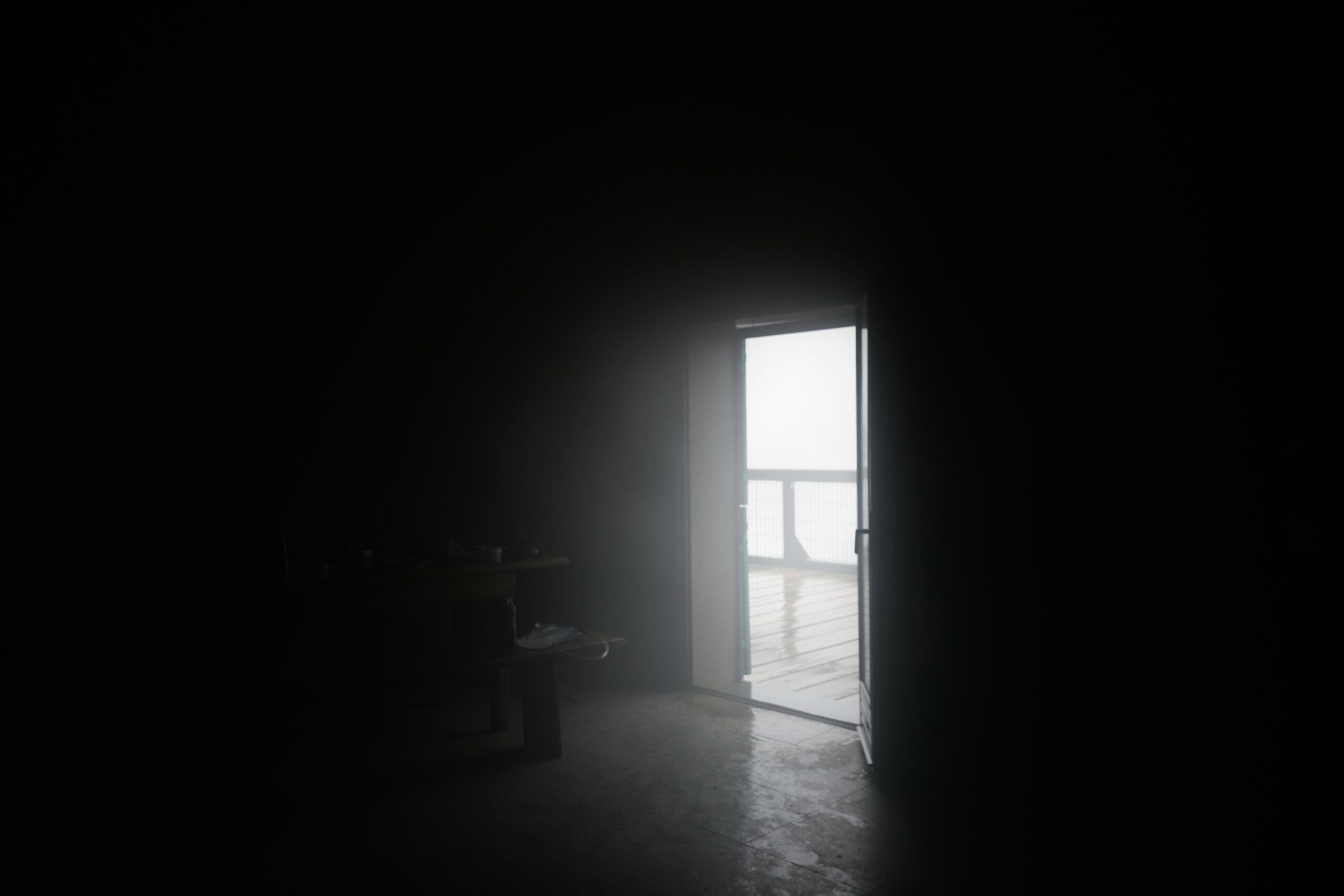
The Stoic “Open Door”
To understand the Stoic position, we must set aside modern views of suicide, which usually frame it as a tragedy resulting from mental illness. The Stoics viewed it philosophically. They called it the “Open Door” (exagoge).
Epictetus used the analogy of a house filled with smoke:
Has some one made a smoke in the house? If he has made a moderate amount of smoke I shall stay; if too much, I go outside. For one ought to remember and hold fast to this, that the door stands open.[1]
The logic is consistent with their system:
- Freedom: If I can choose to leave life at any moment, I am never truly trapped by a tyrant or a disease. My freedom is absolute.
- Dignity: If living requires me to compromise my virtue or endure indignity that breaks my reason, it is better to leave with my character intact than to stay and crumble.
- Indifference: Since life itself is an “indifferent” thing (not a good), ending it is not inherently evil.
Many famous Stoics, including Zeno (the founder), Cleanthes, Cato the Younger, and Seneca, died by their own hands. Cato’s suicide, in particular, was celebrated as the ultimate act of defiance against the tyranny of Julius Caesar. To the Stoic mind, he won by dying on his own terms.
The Christian Post: Soldiers, Not Owners
The Christian worldview rejects this logic root and branch. The rejection begins with a fundamental question: Whose life is it?
The Stoic believes he owns his life. The Christian knows he is a steward.
The ancient philosopher Plato (in the Phaedo) actually anticipated the Christian argument, using the metaphor of a soldier. He argued that we are placed in a body like a soldier at a post, and we must not leave until the Commander relieves us.
Christianity deepens this military metaphor with the doctrine of Creation and Purchase.
- Creation: “It is he who made us, and we are his” (Ps. 100:3). We are property of the Creator. To destroy oneself is to destroy God’s property.
- Redemption: “You are not your own, for you were bought with a price” (1 Cor. 6:19-20). The Christian’s life was purchased by the blood of Christ.
Therefore, suicide is not an act of liberty; it is an act of theft. It is the creature telling the Creator, “I am done with the gift You gave me.” It is the soldier deserting his post because the bombardment has become too heavy.
The Body: Temple vs. Prison
The Stoic often viewed the body as a “prison” or a “shackle” for the rational soul. Escape was a liberation.
But the Christian views the body as a Temple of the Holy Spirit. It is the instrument through which we worship and serve. To destroy the temple is a desecration.
Furthermore, our goal is not to escape the body, but to wait for its redemption (Rom. 8:23). We believe in the Resurrection. Our hope is not to float free as disembodied spirits, but to stand before God in glorified bodies. The Stoic exit is a flight from matter; the Christian hope is the restoration of matter.
The Meaning of Suffering
Why does the Stoic leave the smoky room? Because he believes the suffering has become pointless or unbearable.
But as we argued in the previous article, the Christian believes suffering is purposeful.
- If God keeps you in the furnace, it is because the refining is not yet finished.
- If the Commander keeps you at the post under heavy fire, it is because your stand there matters for the outcome of the war.
To check out early is to short-circuit the sanctification process. It is to say, “God, You have made a mistake in the intensity of this trial.” It is the ultimate failure of trust.
Augustine, in his City of God, critiqued the famous suicide of Lucretia and Cato, arguing that true greatness is found in endurance, not escape. He pointed to Job, who sat on the ash heap, scraping his sores, yet refused to “curse God and die.” Job is the greater hero because he stayed in the smoke until God cleared the air.
A Note on Compassion
We must distinguish here between the philosophical advocacy of suicide (which Stoicism teaches) and the tragic reality of suicide driven by mental anguish or chemical imbalance.
When a Stoic philosopher argues that suicide is a noble right, we condemn the philosophy as a lie from the pit of hell. It is a serpentine whisper of “autonomy.”
However, when a broken man succumbs to the darkness of depression, the Church responds with grief and compassion, entrusting him to the mercy of God. We judge the act as a violation of God’s law (the Sixth Commandment, “Thou shalt not murder,” applies to oneself), but we do not necessarily judge the eternal state of the soul, which is known to God alone.
Our rejection of the doctrine of suicide is, in fact, an act of love. We tear down the “Open Door” sign so that men will be forced to turn to the only true Door: Jesus Christ.
Conclusion: Staying Until the End
The Christian Stoic is the man who stays.
He stays when the marriage is hard. He stays when the body is broken. He stays when the culture collapses. He stays because he is under orders.
He knows that his life is not his own to take. It is a weapon in the hand of his King, to be used until it is spent. He does not seek the “Open Door” of escape; he seeks the “Well Done” of the Master.
He echoes the Apostle Paul, who, while longing to depart and be with Christ, concluded: “To remain in the flesh is more necessary on your account” (Phil. 1:24). He chooses the burden of love over the relief of exit.
In our final article, we will bring this entire series to a close. We will synthesize everything we have learned—the foundations, the tools, and the rejections—into a final vision of the Christian Stoic Man: a man of iron faith and ordered affections, living for the glory of God in an age of anxiety.
Key Terms
- Exagoge: (Greek, “The Way Out” or “Departure”). The Stoic euphemism for suicide, framing it as a rational, permissible departure from life when circumstances (like tyranny or illness) prevent virtuous living.
- The Sixth Commandment: “Thou shalt not murder.” The Reformed tradition (see Westminster Larger Catechism Q/A 134-136 and Heidelberg Catechism Q/A 105) has historically understood this to prohibit self-murder (suicide) as well as the murder of others, as both destroy the Image of God.
- Stewardship of Life: The doctrine that human beings are not absolute owners of their lives or bodies, but trustees who must manage them for the Master’s profit and return them only when He calls for them.
- Self-Murder: The traditional Protestant term for suicide, emphasizing the moral gravity of the act as a violation of justice against God (the Creator) and the community.
[1] Epictetus, Epictetus, the Discourses as Reported by Arrian, the Manual, and Fragments, trans. William Oldfather (Cambridge: Harvard University Press, 1925).