In the previous chapter, we traced the agonizing, magnificent survival of the Old Testament church. Despite the relentless rebellion of Israel, the devastation of the exile, and the fierce assaults of Satan, God sovereignly preserved the promised seed line. All of that history, the wars, the prophets, the tabernacle, and the waiting, was building toward… Continue reading Very God and Very Man: On the Incarnation (Scots Confession, Chapter 6)
Category: Confessional Standards
A Marvelous Preservation: On the Continuance of the Kirk (Scots Confession, Chapter 5)
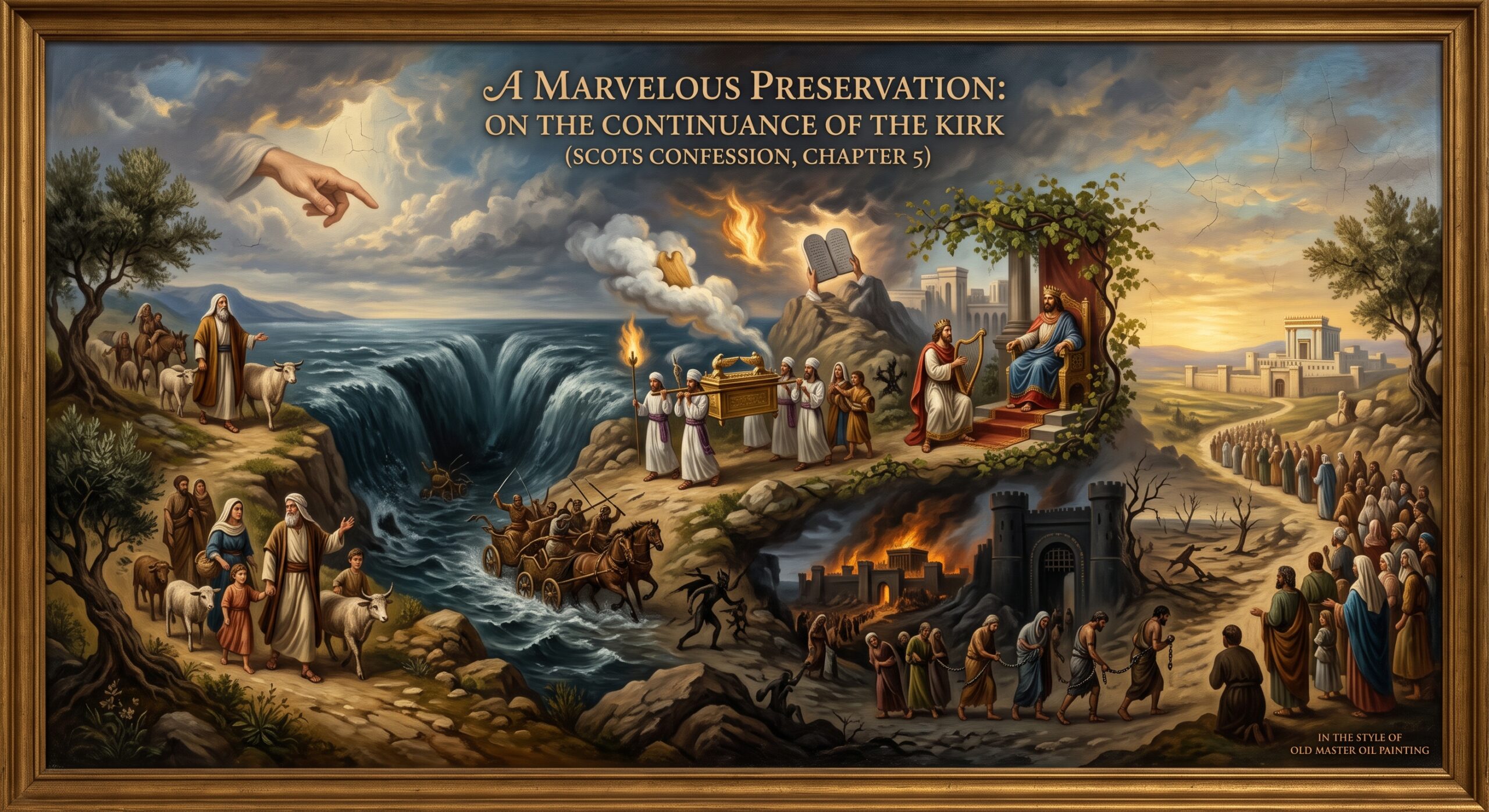
In Chapter 4 of the Scots Confession, we saw the glorious dawn of redemptive history. Following the catastrophic fall of mankind, God broke into the darkness with a brilliant promise: the Seed of the woman would ultimately crush the head of the Serpent. But a profound question immediately arises. How did that promise survive? If… Continue reading A Marvelous Preservation: On the Continuance of the Kirk (Scots Confession, Chapter 5)
The First Gospel: On the Revelation of the Promise (Scots Confession, Chapter 4)

In the previous chapter, the Scottish Reformers left us with a profoundly bleak diagnosis of the human condition. Due to the cosmic treason of our first parents in the Garden of Eden, the image of God was “utterly defaced” in mankind. We were rendered natural enemies of our Creator, slaves to Satan, and bound for… Continue reading The First Gospel: On the Revelation of the Promise (Scots Confession, Chapter 4)
Utterly Defaced: On Original Sin (Scots Confession, Chapter 3)
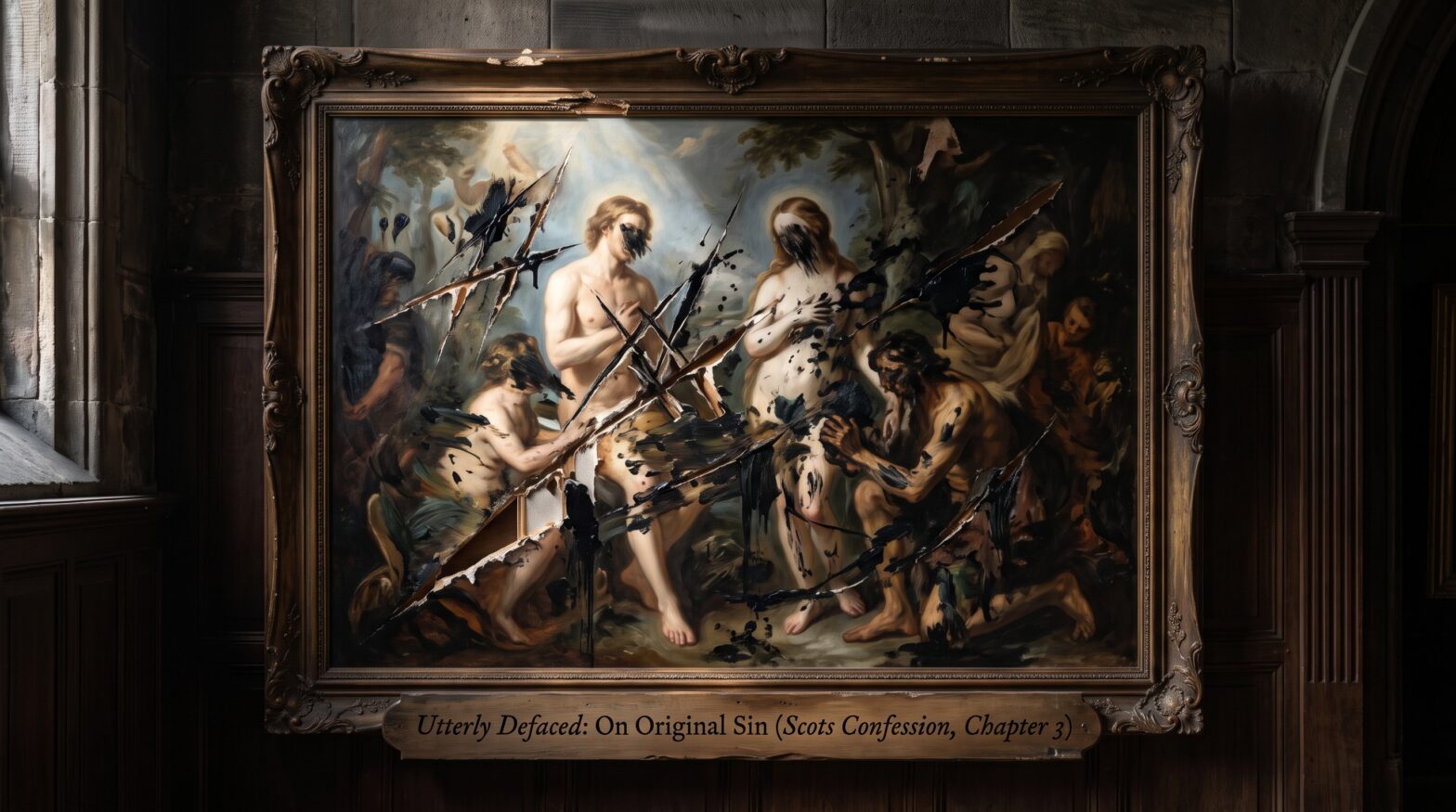
In the previous chapter of the Scots Confession, we looked at the breathtaking heights of early humanity and the catastrophic plunge of the Fall. Adam and Eve were created in pristine perfection, shining with the image of God. However, through a willful and cosmic conspiracy against the Sovereign Lord, they plummeted into ruin. If Chapter… Continue reading Utterly Defaced: On Original Sin (Scots Confession, Chapter 3)
Image and Treason: On the Creation and Fall of Man (Scots Confession, Chapter 2)
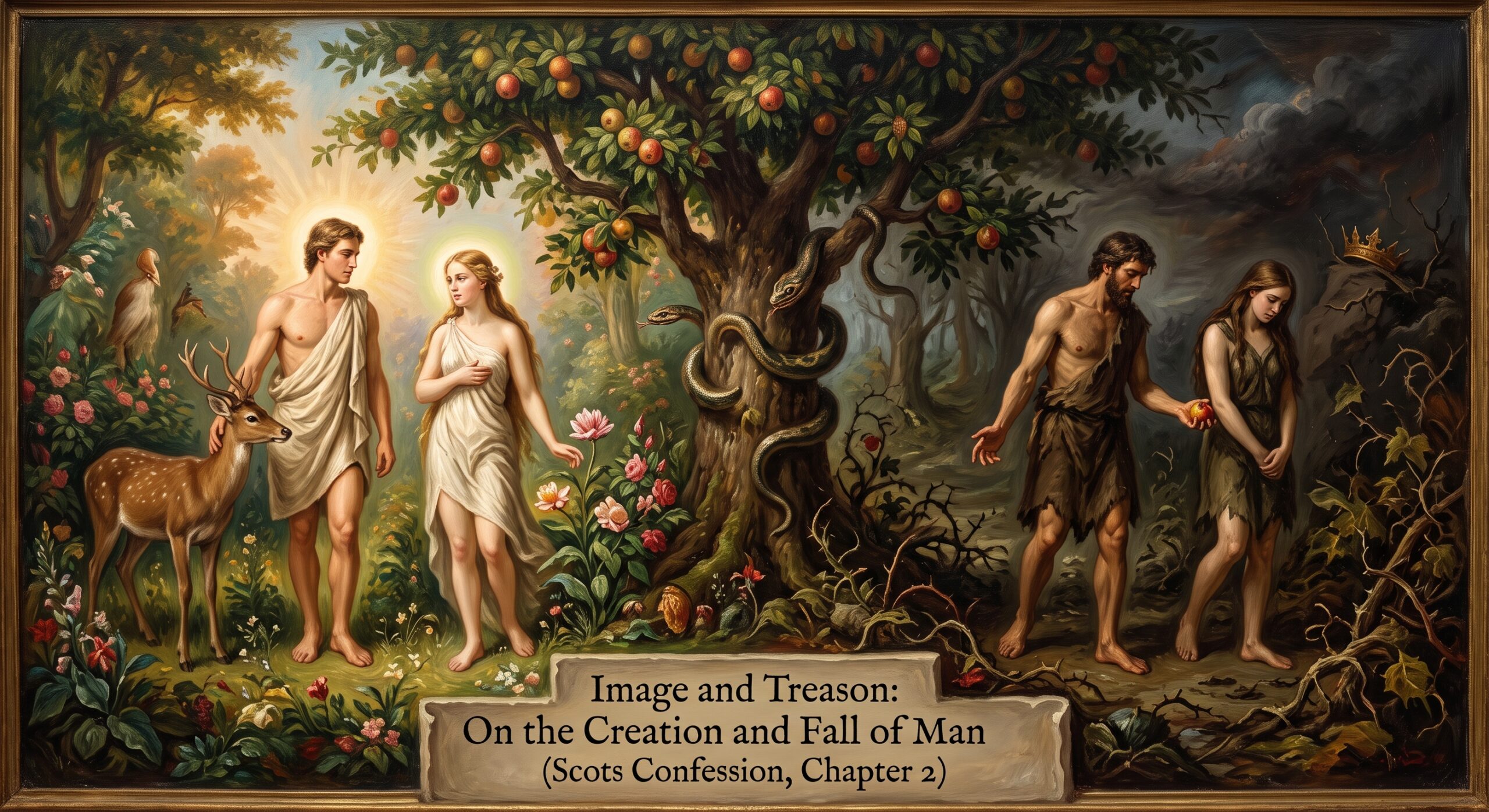
In the opening chapter of the Scots Confession, the Reformers fixed our eyes on the incomprehensible majesty of the Triune God. Having established the Creator, they immediately pivot in Chapter 2 to the pinnacle of His earthly creation. In a single, breathtaking paragraph, the “Six Johns” cover the entire trajectory of early human history. They… Continue reading Image and Treason: On the Creation and Fall of Man (Scots Confession, Chapter 2)
To Whom Only We Must Cleave: On God and His Providence (Scots Confession, Chapter 1)
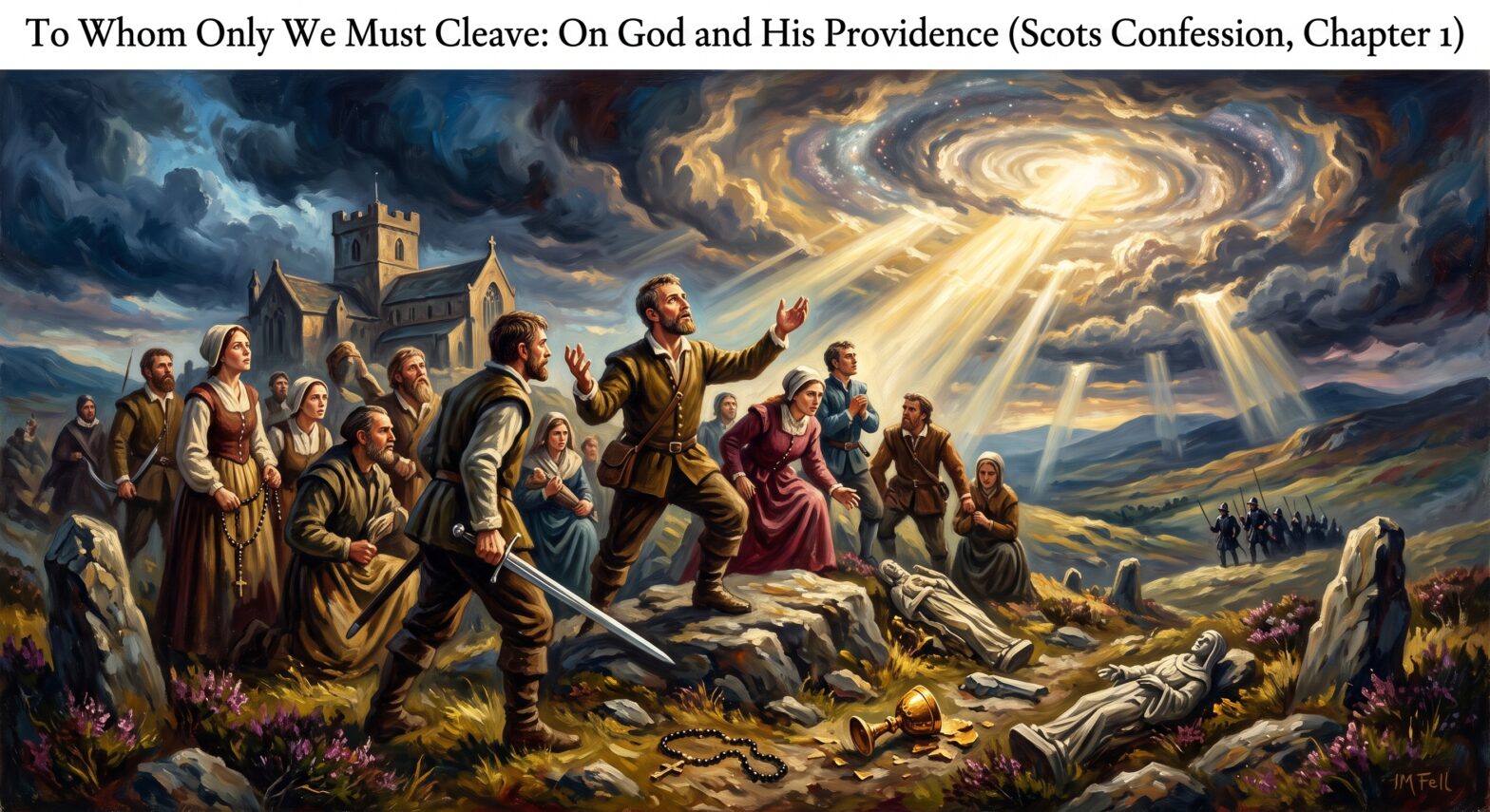
When we open the great confessions of the Reformation, we often find a distinct difference in where they choose to begin. The Westminster Confession of Faith, written nearly a century later in a highly scholastic era, begins with epistemology, how we know what we know, by dedicating its entire first chapter to the Holy Scriptures. But the earlier,… Continue reading To Whom Only We Must Cleave: On God and His Providence (Scots Confession, Chapter 1)
We Have Chief Respect to Our Weak Brethren: On the Preamble to the Scots Confession
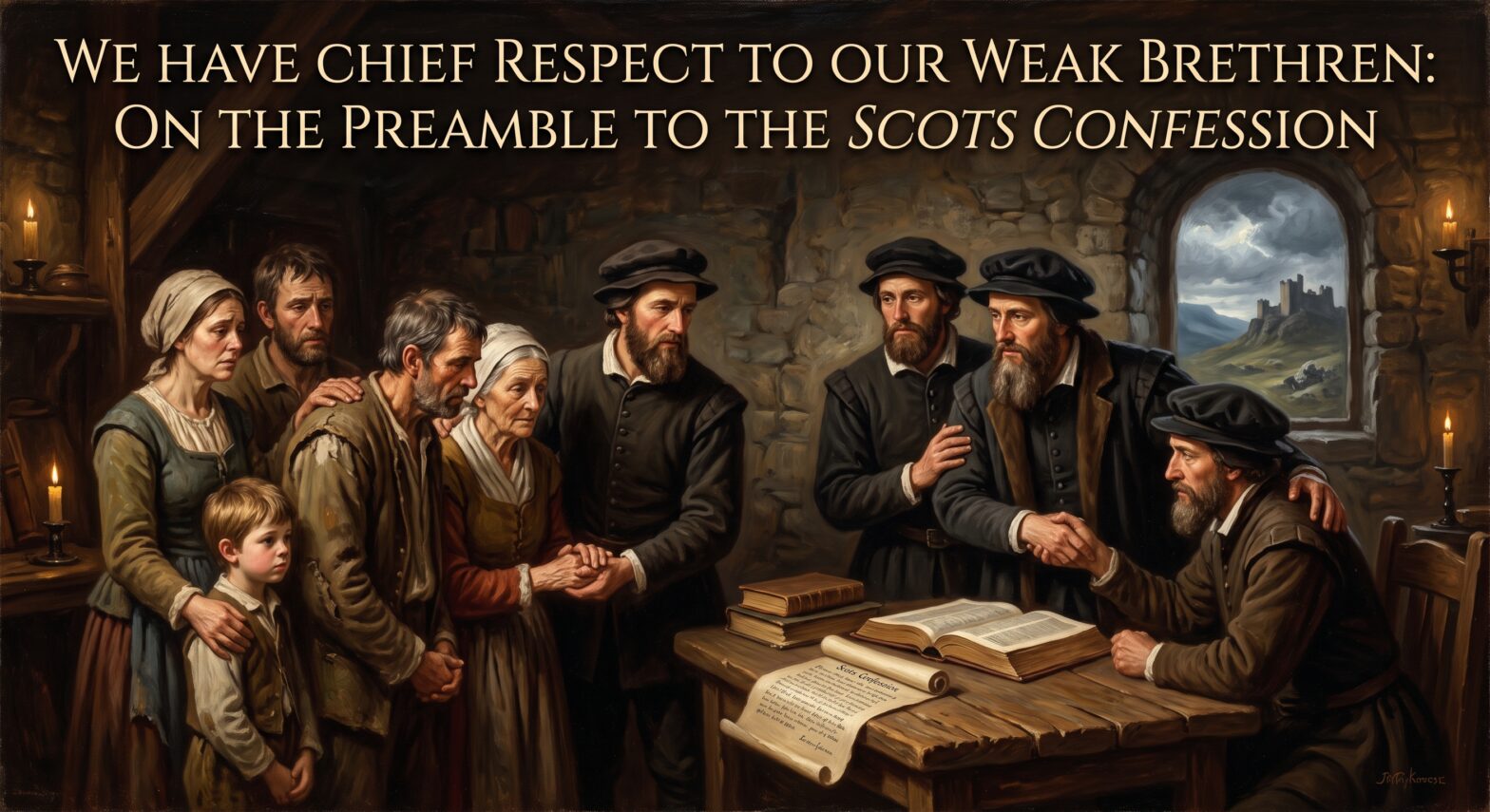
As I have studied of historical theology, I have observed a tendency among modern Reformed men to view our confessional documents in a highly sanitized, academic light. We look at the leather-bound volumes on our shelves and subconsciously imagine that they were handed down from heaven, or at least drafted in comfortable, oak-paneled libraries by… Continue reading We Have Chief Respect to Our Weak Brethren: On the Preamble to the Scots Confession
Before Westminster: An Introduction to the Scots Confession of 1560
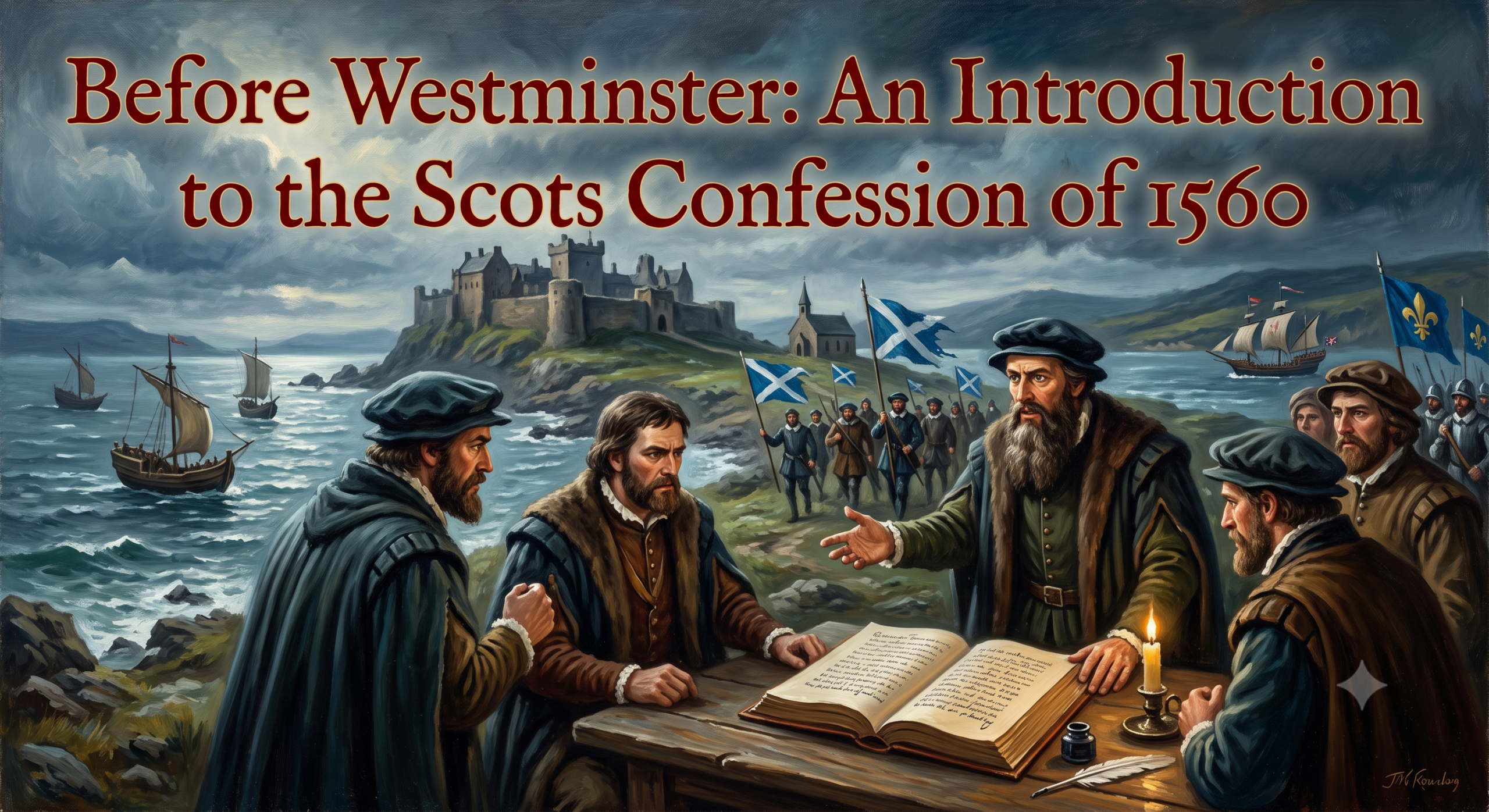
Modern Reformed Christians are often deeply familiar with the Westminster Standards (originating in 1640s England) and the Three Forms of Unity (originating in the continental Reformation). These documents are masterpieces of theological precision and continue to serve as the bedrock for conservative Presbyterian and Reformed denominations today. But what did Reformed Christians believe before Westminster? There is… Continue reading Before Westminster: An Introduction to the Scots Confession of 1560
When He Shall Come to Judge: On the Last Judgment (WCF 33.1–33.3)
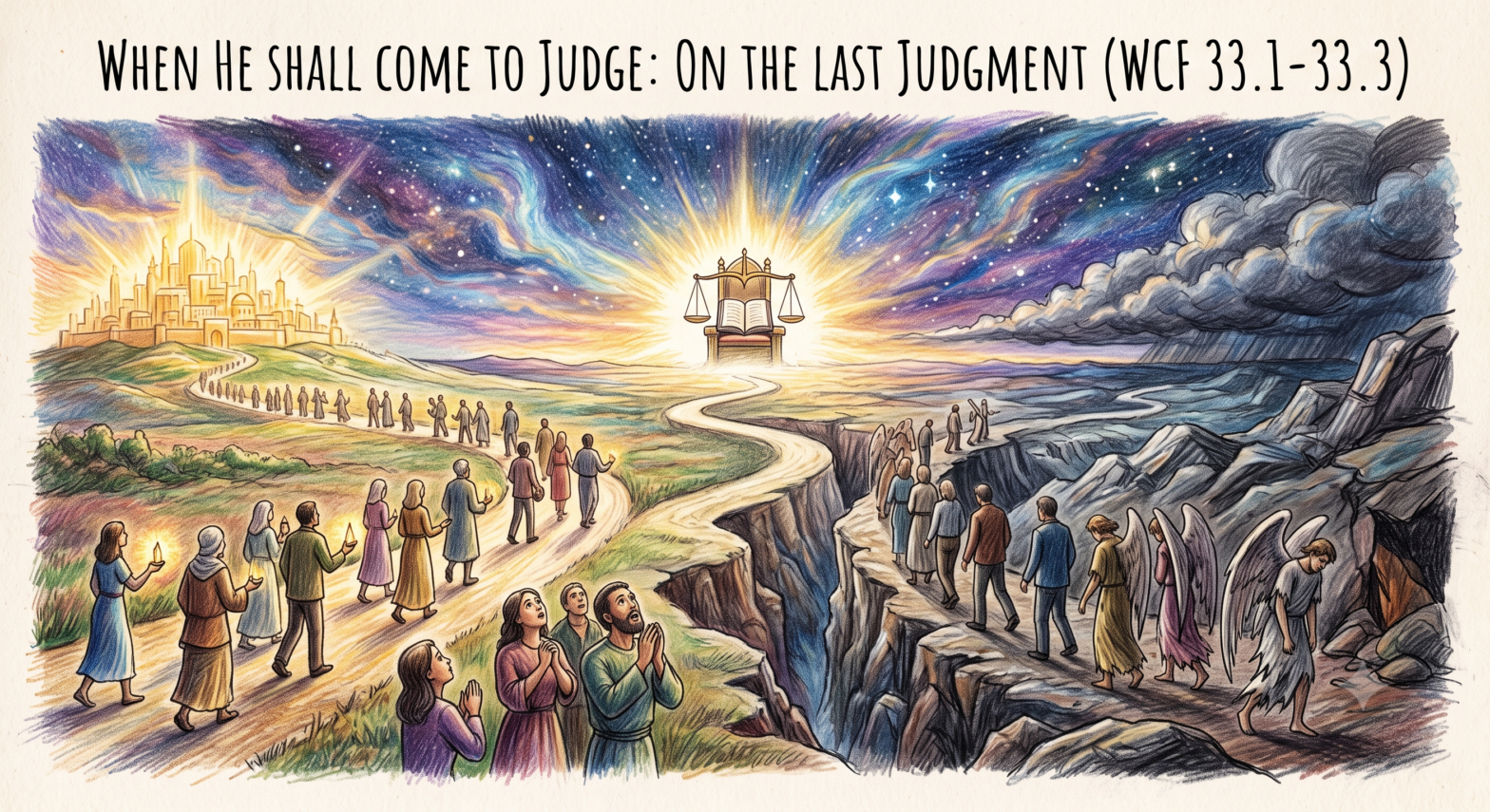
We have reached the majestic and solemn conclusion of the Westminster Confession of Faith. From the opening chapter on the necessity of Holy Scripture, through the eternal decrees of God, the fall of man, the covenant of grace, the work of Christ, and the establishment of His Church, all of human history is driving toward… Continue reading When He Shall Come to Judge: On the Last Judgment (WCF 33.1–33.3)
Until the Great Day: On the State of Men After Death (WCF 32.1–32.3)
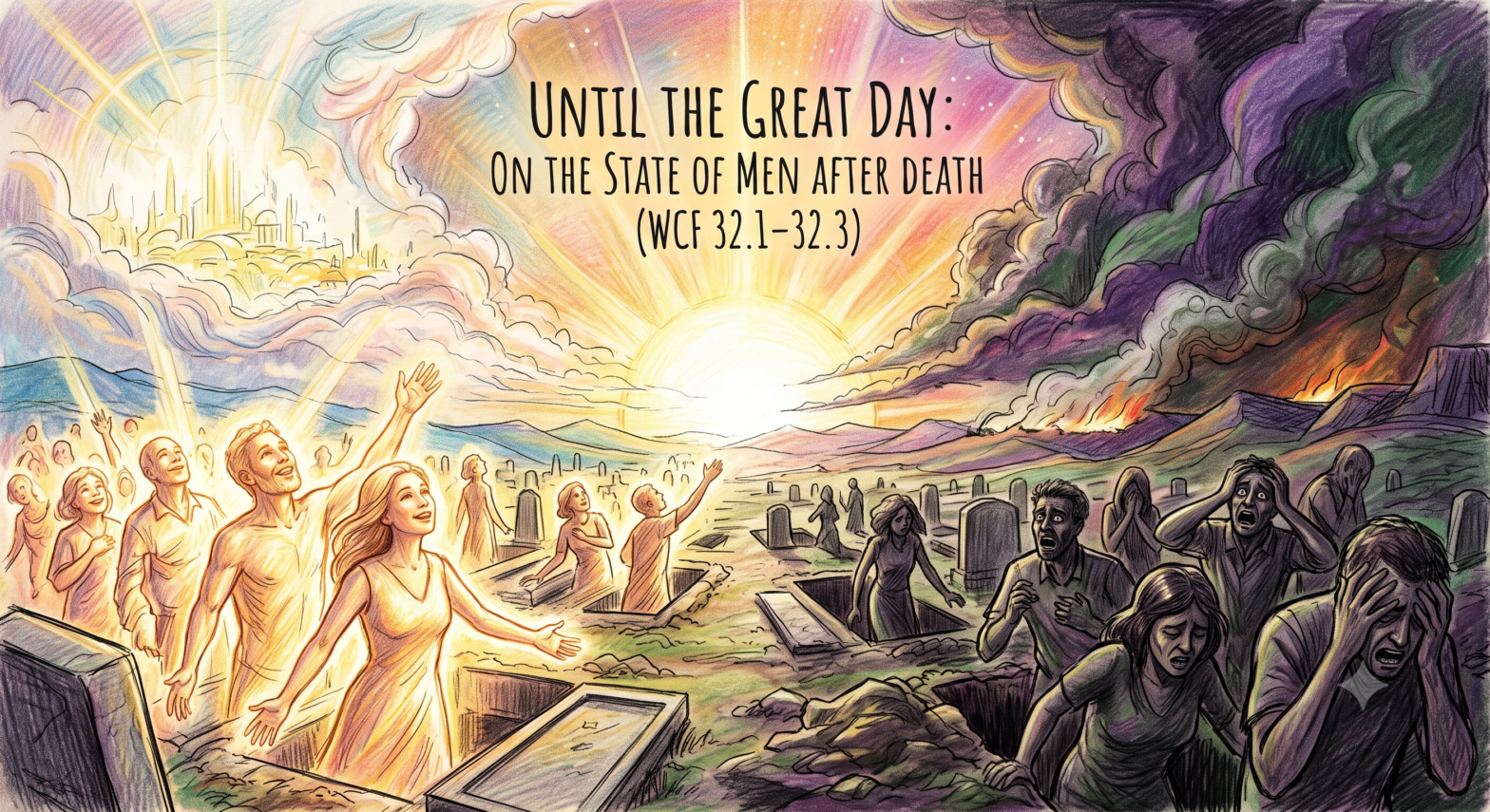
Death is the great, unavoidable reality of human existence. Because modern secular culture has no answer for death, it largely tries to ignore it. Meanwhile, popular religion is often filled with comforting but unbiblical sentimentalities, such as the idea that humans become angels when they die, or that the ultimate goal of salvation is simply… Continue reading Until the Great Day: On the State of Men After Death (WCF 32.1–32.3)