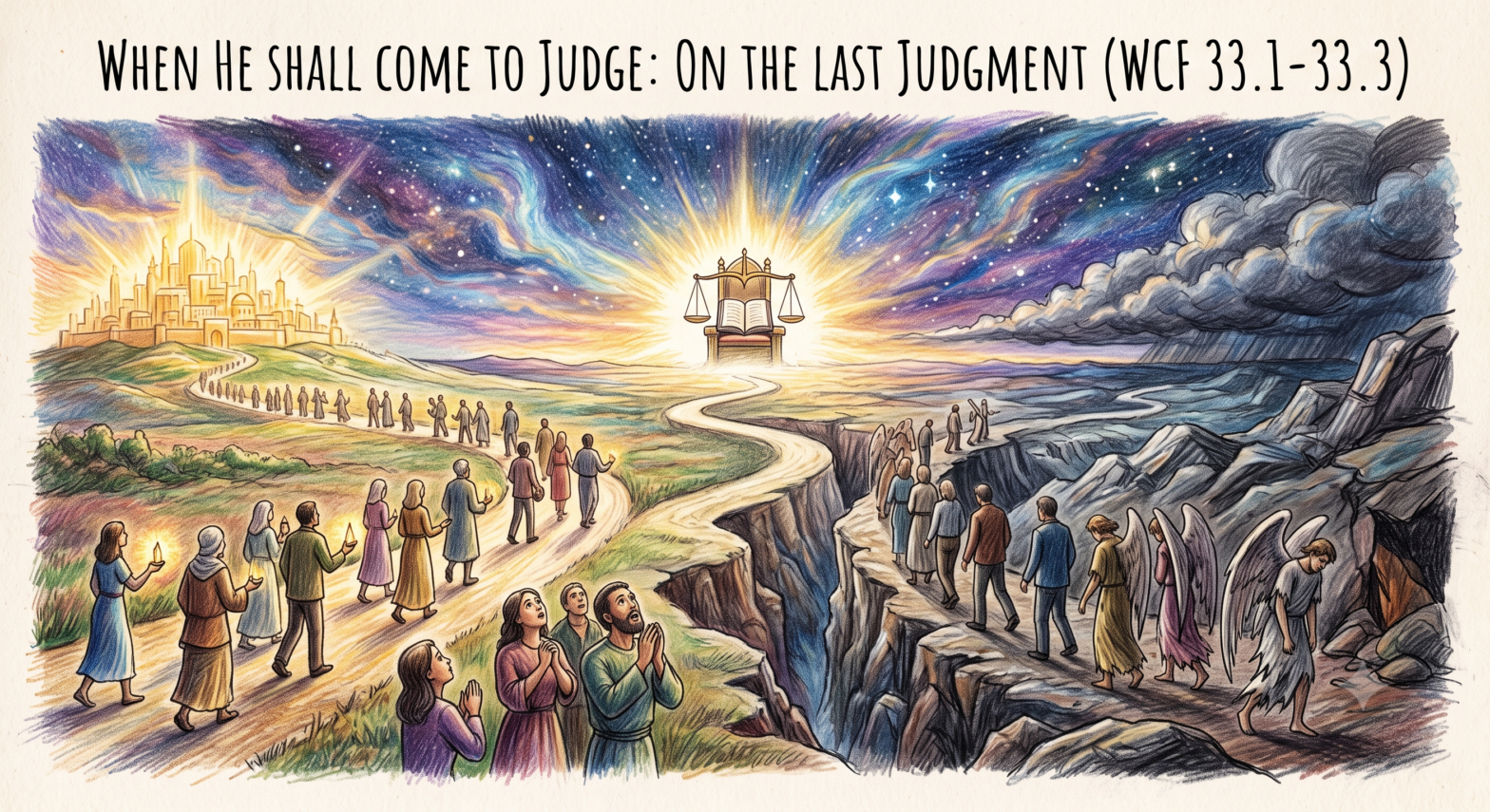
We have reached the majestic and solemn conclusion of the Westminster Confession of Faith. From the opening chapter on the necessity of Holy Scripture, through the eternal decrees of God, the fall of man, the covenant of grace, the work of Christ, and the establishment of His Church, all of human history is driving toward… Continue reading When He Shall Come to Judge: On the Last Judgment (WCF 33.1–33.3)
Category: Westminster Confession of Faith
Until the Great Day: On the State of Men After Death (WCF 32.1–32.3)
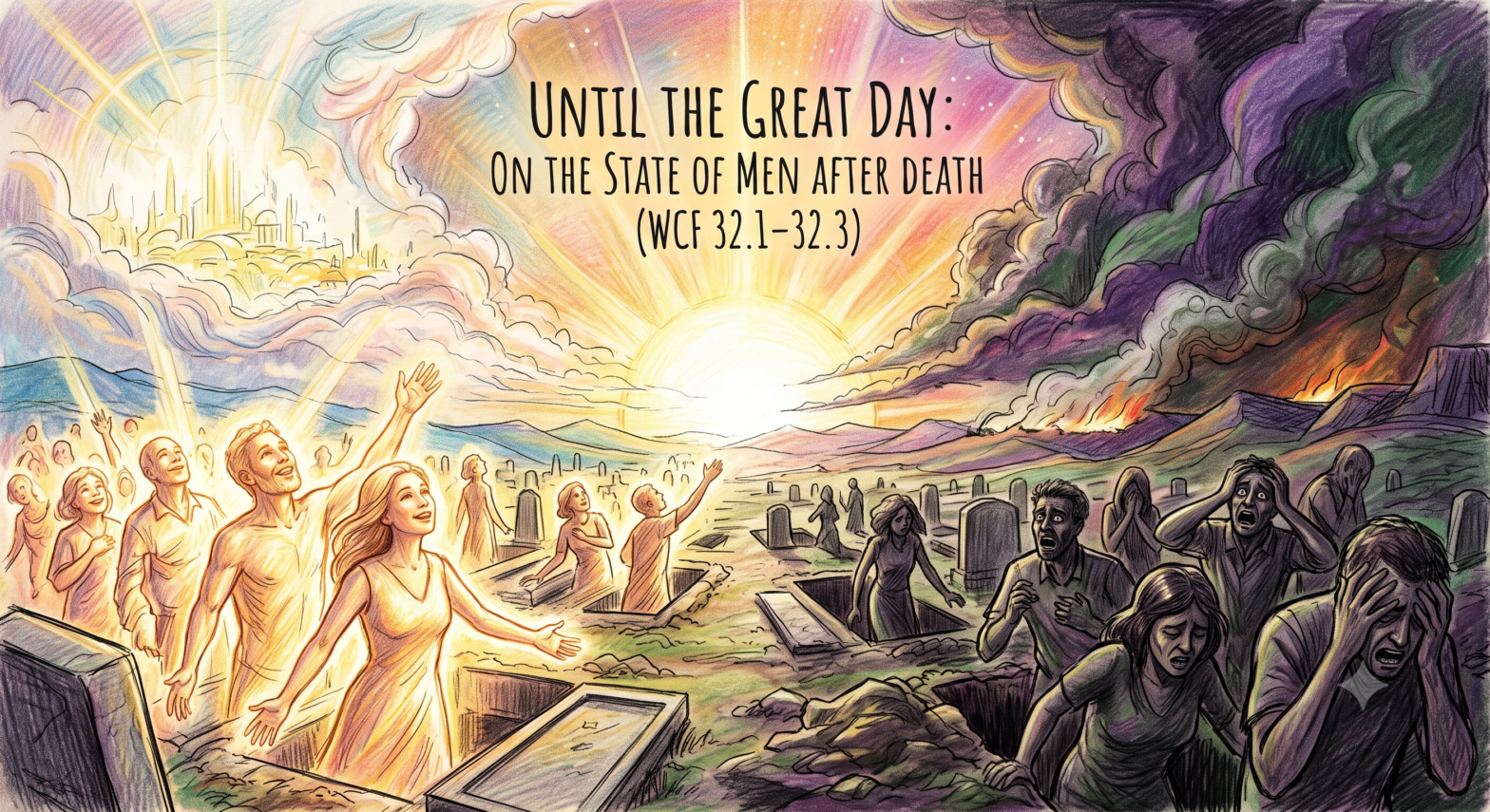
Death is the great, unavoidable reality of human existence. Because modern secular culture has no answer for death, it largely tries to ignore it. Meanwhile, popular religion is often filled with comforting but unbiblical sentimentalities, such as the idea that humans become angels when they die, or that the ultimate goal of salvation is simply… Continue reading Until the Great Day: On the State of Men After Death (WCF 32.1–32.3)
For Edification: On Synods and Councils (WCF 31.1–31.5)
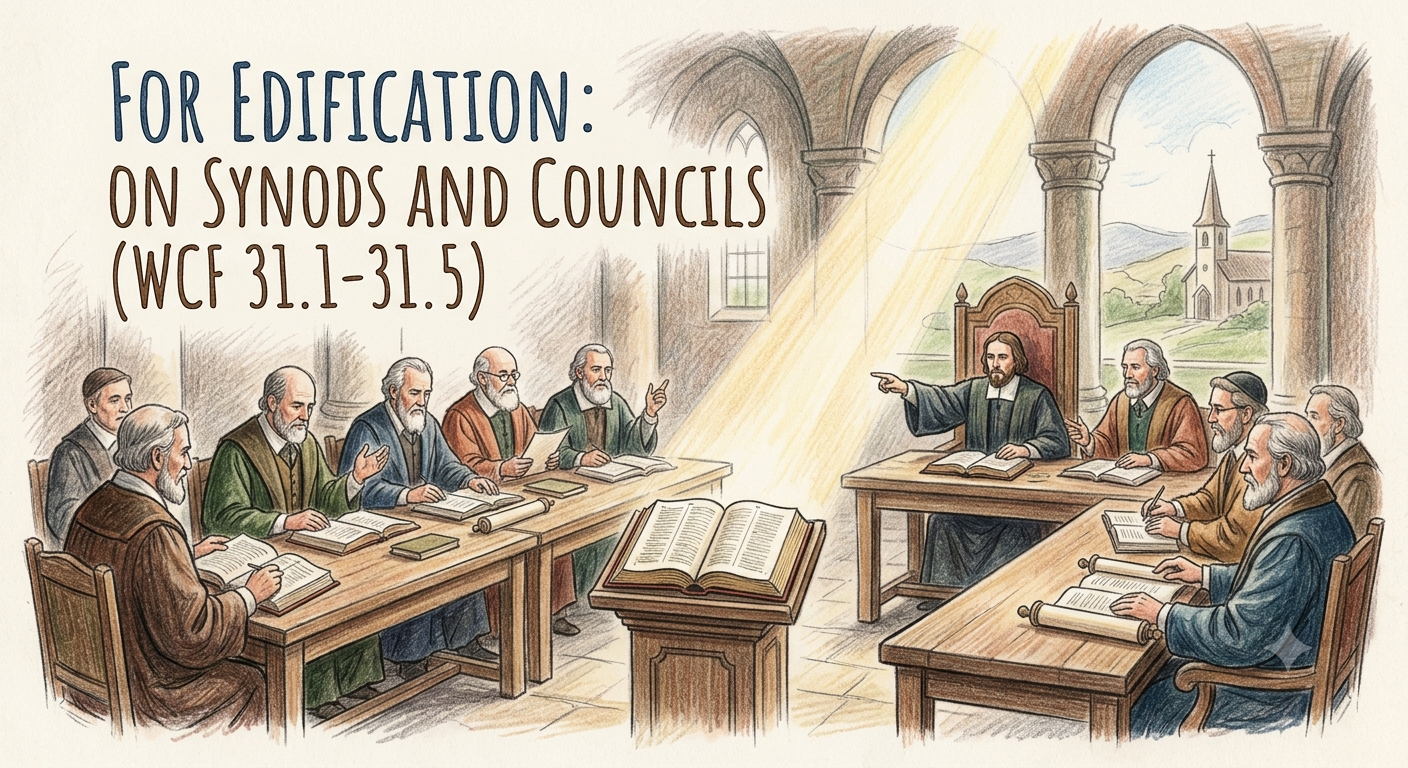
In the previous chapter, we saw that Christ has appointed a government for His Church, placed in the hands of church officers. But how far does that government extend? Does a local congregation operate entirely on its own, completely independent of all other churches? Or is it part of a broader, connected body? In Chapter… Continue reading For Edification: On Synods and Councils (WCF 31.1–31.5)
The Keys of the Kingdom: On Church Discipline (WCF 30.1–30.4)
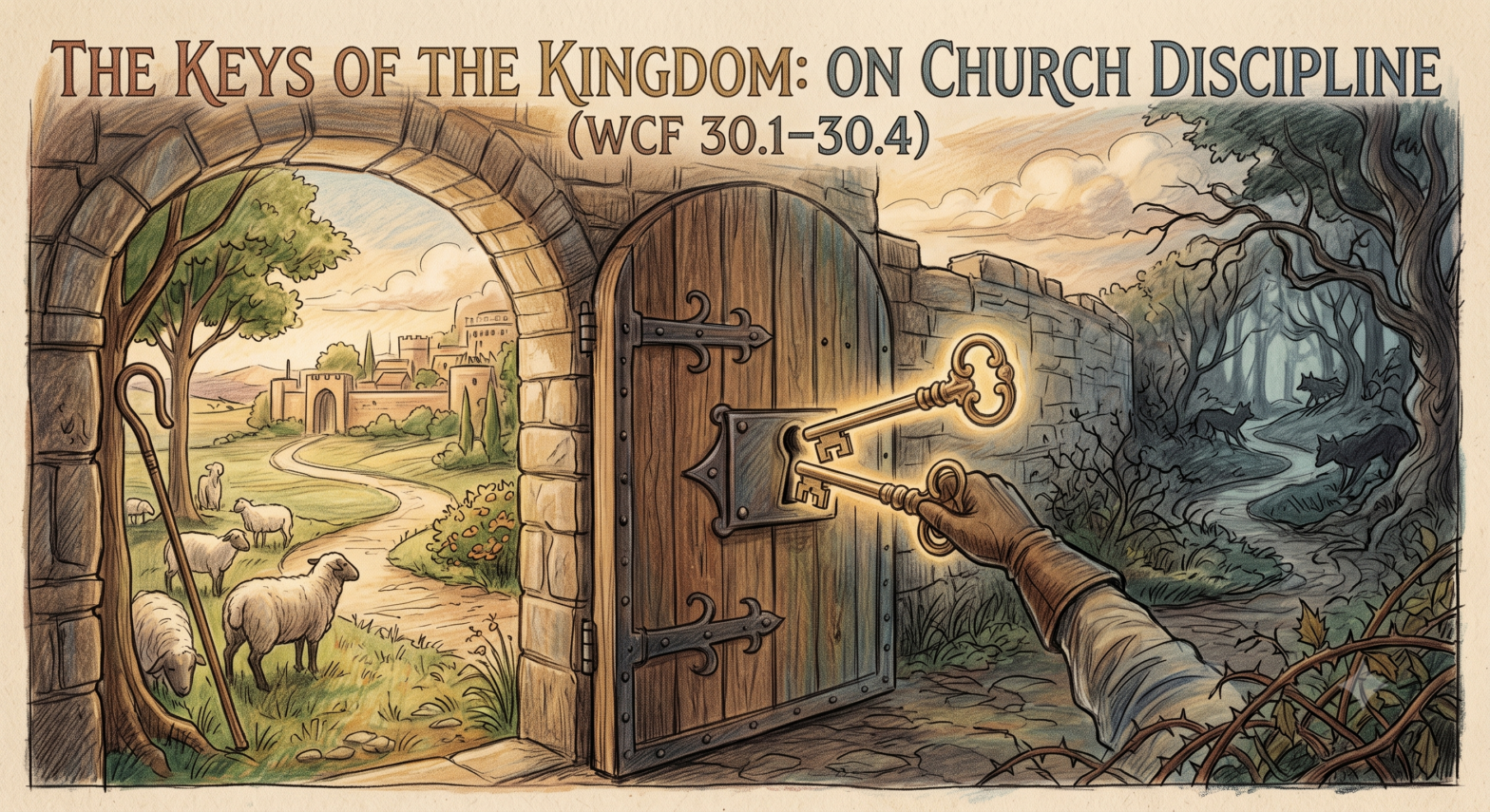
In modern evangelicalism, the concept of “church discipline” has almost entirely vanished. To the modern ear, discipline sounds harsh, judgmental, and fundamentally unloving. Because many view the church merely as a voluntary club or a weekly inspirational gathering, the idea that church leaders have actual, binding authority over someone’s life feels deeply offensive. However, the… Continue reading The Keys of the Kingdom: On Church Discipline (WCF 30.1–30.4)
Spiritual Nourishment: On Receiving the Lord’s Supper (WCF 29.5–29.8)
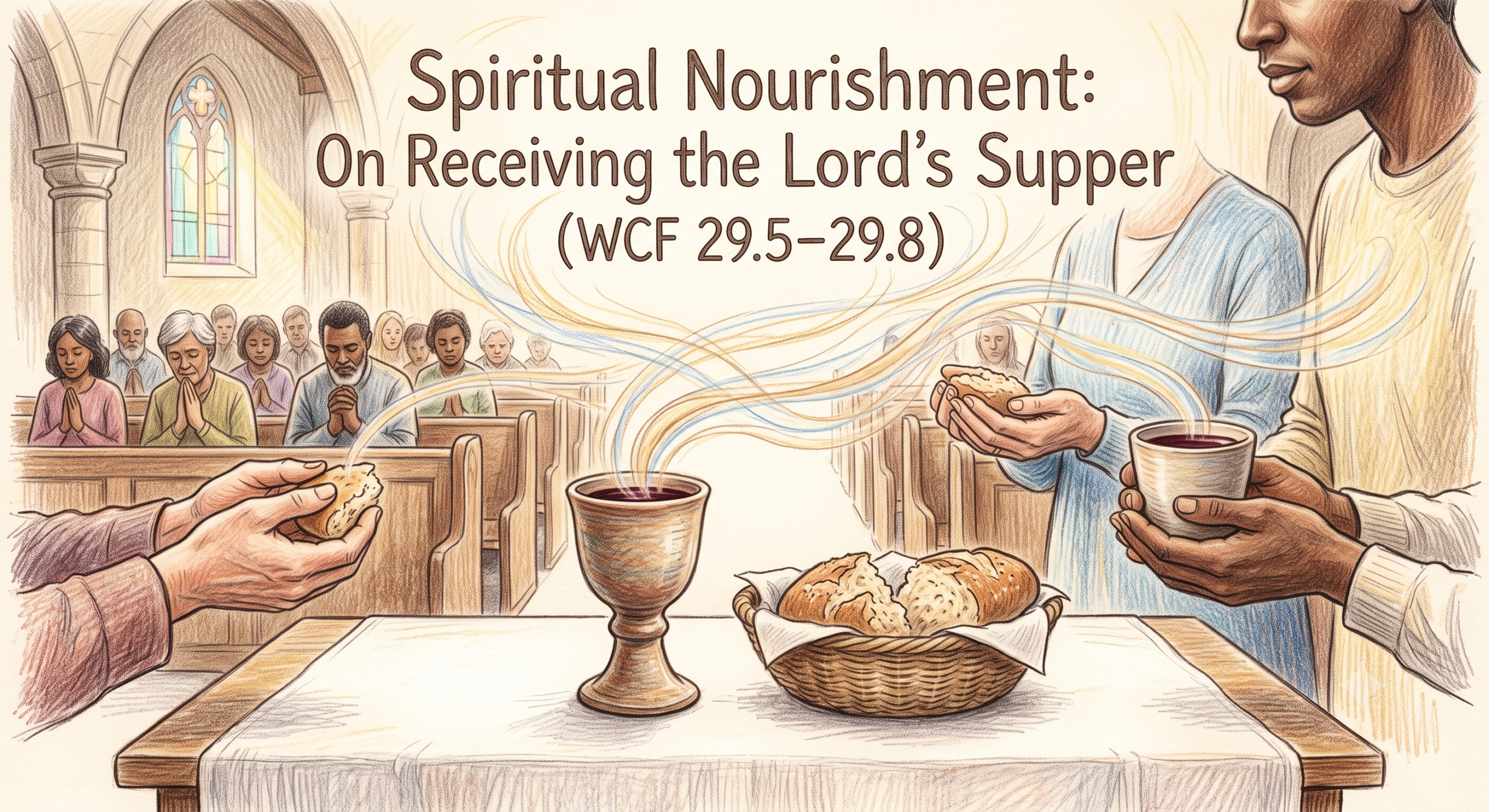
Throughout church history, no doctrine has been more fiercely debated than the Lord’s Supper. During the Reformation, the exact nature of Christ’s presence in the bread and wine was the ultimate theological dividing line, permanently fracturing the movement into different traditions. What exactly happens when a Christian eats the bread and drinks the wine? Is… Continue reading Spiritual Nourishment: On Receiving the Lord’s Supper (WCF 29.5–29.8)
This Do in Remembrance: On the Lord’s Supper (WCF 29.1–29.4)
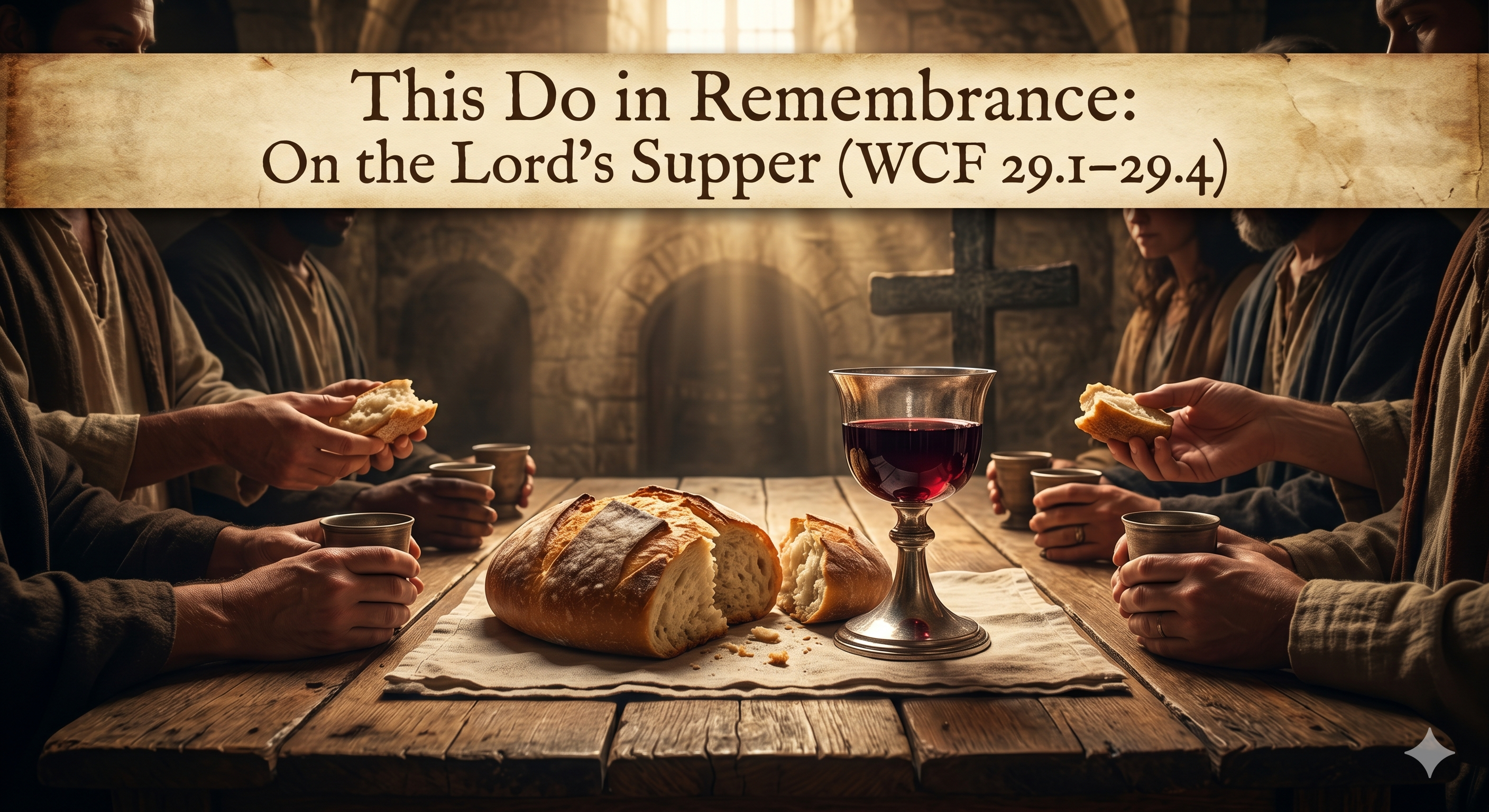
If you were to walk into many modern evangelical churches on a Sunday morning, you might find the Lord’s Supper treated as an afterthought—a tiny cracker and a plastic cup of juice quickly consumed while a soft worship song plays in the background, primarily serving as a private moment for individuals to close their eyes… Continue reading This Do in Remembrance: On the Lord’s Supper (WCF 29.1–29.4)
A Seal of the Covenant: On the Sacrament of Baptism (WCF 28.1–28.7)
If you ask the average evangelical Christian today what baptism is, you will likely hear some variation of this: “It is an outward expression of an inward reality. It is my public testimony to the church and the world that I have decided to follow Jesus.” While there is an element of truth to that… Continue reading A Seal of the Covenant: On the Sacrament of Baptism (WCF 28.1–28.7)
Signs and Seals: On the Nature of the Sacraments (WCF 27.1–27.5)
Human beings are physical creatures. We do not just think with our minds; we see, hear, taste, and touch. Because God created us this way, He does not only speak His Gospel to us in invisible, abstract ideas. In His immense kindness, He has also given us a Gospel we can see, feel, and taste.… Continue reading Signs and Seals: On the Nature of the Sacraments (WCF 27.1–27.5)
United in One Spirit: On the Communion of Saints (WCF 26.1–26.3)
Millions of Christians gather every Sunday and recite the Apostles’ Creed, declaring, “I believe in… the communion of saints.” But what exactly does that mean? For many, the phrase conjures up vague ideas about believers who have died and gone to heaven. However, the Reformed understanding of this doctrine is far more grounded, practical, and… Continue reading United in One Spirit: On the Communion of Saints (WCF 26.1–26.3)
The Body of Christ: On the Nature of the Church (WCF 25.1–25.6)
In our modern, hyper-individualized culture, it is common to hear people say, “I love Jesus, but I don’t need the church.” Many view the church as a helpful, but ultimately optional, voluntary association of like-minded religious consumers. The Westminster Confession utterly shatters this low view of the church. In Chapter 25, the divines present a… Continue reading The Body of Christ: On the Nature of the Church (WCF 25.1–25.6)