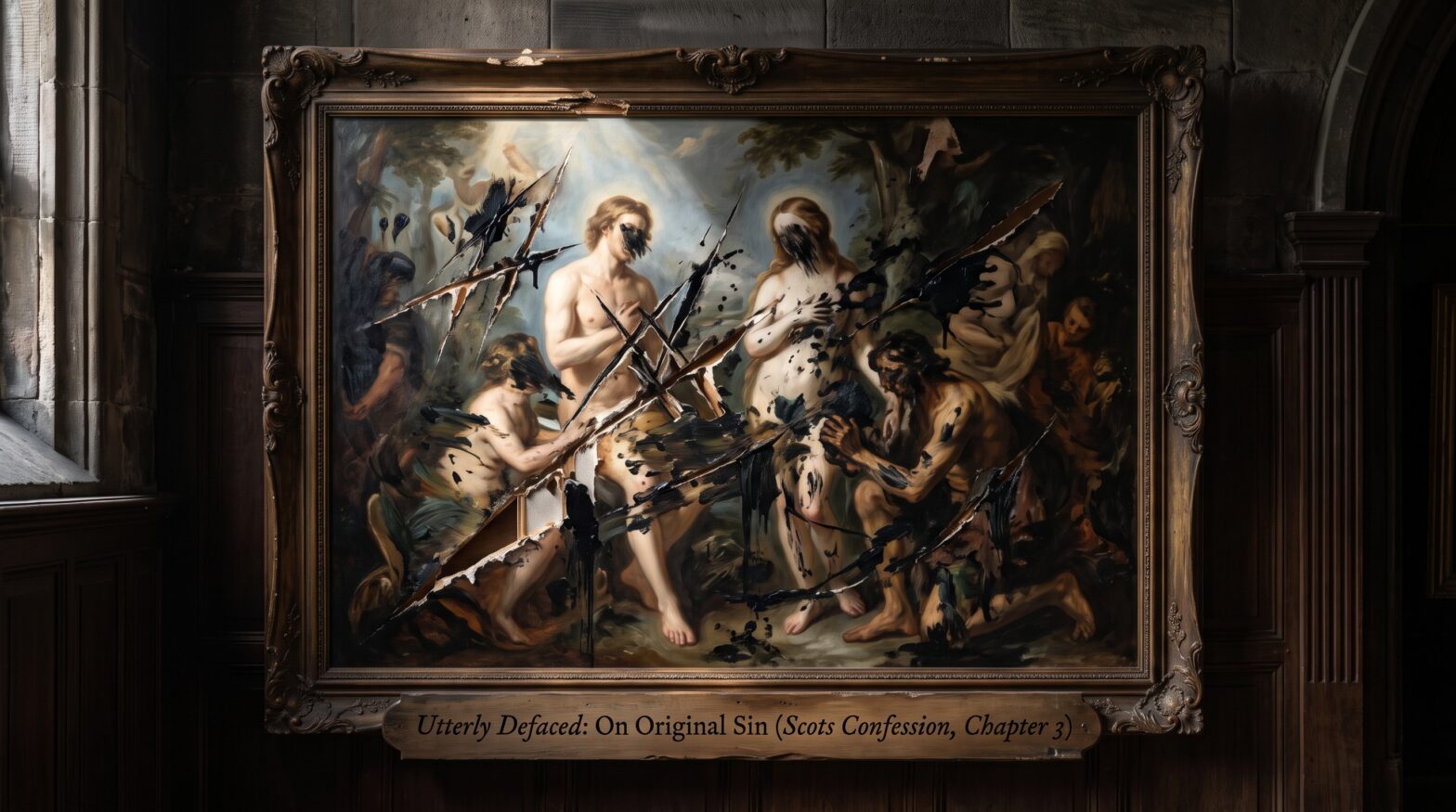
In the previous chapter of the Scots Confession, we looked at the breathtaking heights of early humanity and the catastrophic plunge of the Fall. Adam and Eve were created in pristine perfection, shining with the image of God. However, through a willful and cosmic conspiracy against the Sovereign Lord, they plummeted into ruin.
If Chapter 2 tells the story of how we fell, Chapter 3 details the devastating, inescapable results of that fall.
The Scottish Reformers understood that a light view of sin always leads to a light view of the Gospel. If the disease is merely a minor cold, the cure can be a simple remedy. But if the disease is fatal, the cure must be nothing short of resurrection. In Chapter 3, the “Six Johns” diagnose the human condition with terrifying accuracy.
The Confession teaches that the fall of Adam entirely corrupted human nature, utterly defacing the image of God and rendering all humanity natural enemies of God and slaves to sin; consequently, everlasting death holds absolute dominion over all men unless they are sovereignly regenerated by the Holy Spirit and granted the gift of saving faith.
III. Of Original Sin
By which transgression, commonly called original sin, was the image of God utterly defaced in man. And he and his posterity of nature became enemies to God, slaves to Satan, and servants to sin, that death everlasting has had, and insofar will have, power and domination over all that have not been, are not, or will not be regenerated from above. Which regeneration is wrought by the power of the Holy Ghost working in the hearts of the elect of God, an assured faith in the promises of God revealed to us in His Word, by which faith they apprehend Christ Jesus with the graces and benefits promised in Him.
The Utter Defacement
The chapter opens with a stark assessment of the damage caused by our first parents’ treason: “By which transgression, commonly called original sin, was the image of God utterly defaced in man.”
Notice the powerful, violent language used here. The image of God (which we previously defined as mankind’s original wisdom, lordship, justice, free will, and clear knowledge of God) was not merely dented. It was not chipped, smudged, or slightly obscured. It was utterly defaced.
To “deface” something is to vandalize it so severely that the original beauty is ruined. Imagine a priceless Renaissance painting that has been slashed with a knife and covered in black spray paint. The canvas is still there, but the masterpiece is unrecognizable. This is the Reformed doctrine of Total Depravity. We are still humans, but every faculty of our being, from our intellect to our desires to our physical bodies, has been corrupted by the poison of original sin. We no longer naturally reflect the glory of our Creator; instead, we reflect the rebellion of the Serpent.
Enemies, Slaves, and Servants
Having established the total corruption of our nature, the Confession moves to describe our relational status. As a result of this defacement, Adam and all his descendants “of nature became enemies to God, slaves to Satan, and servants to sin.”
This is a crushing, threefold diagnosis of the natural man:
- Enemies to God: This shatters the popular modern myth that all humans are naturally the “children of God” and that everyone is basically seeking Him in their own way. The Bible teaches the exact opposite (Romans 5:10). By our very nature, we are hostile to the authority, holiness, and true character of the God of the Bible.
- Slaves to Satan: While modern people like to believe they are the autonomous captains of their own souls, the Confession affirms that fallen man is actually in bondage to the “prince of the power of the air” (Ephesians 2:2). We naturally operate according to the will of the Enemy.
- Servants to Sin: Remember the true “free will” that Adam possessed in the garden? That freedom was lost in the Fall. Unregenerate man is not free; he is bound by his own corrupted desires. He sins because it is his nature to sin, just as a dog barks because it is a dog’s nature to bark.
The Domination of Death
What is the necessary consequence for a race of rebels who are enslaved to sin and actively at war with their Creator?
The divines state that “death everlasting has had, and insofar will have, power and domination over all.” This is not just referring to physical death, though that is included. It is pointing to the terrifying reality of eternal separation from God under His just wrath.
Death is not presented as a passive consequence; it is a tyrant. It has “power and domination.” Left to ourselves, we are completely powerless to break its grip. We cannot educate ourselves out of it, we cannot legislate our way out of it, and we certainly cannot achieve enough good works to overcome it. We are spiritually dead in our trespasses (Ephesians 2:1), and a corpse cannot resuscitate itself.
The Miracle of Regeneration
Right at the moment when the diagnosis seems utterly hopeless, the Confession pivots to the glorious, singular cure: “…that have not been, are not, or will not be regenerated from above.”
Because we are spiritually dead and our wills are enslaved, salvation cannot begin with a human decision. It must begin with a divine resurrection. This is what Jesus meant when He told Nicodemus, “You must be born again” (John 3:7).
The Confession is crystal clear on the mechanics of this salvation. It is not a cooperative effort between God and man. This “regeneration is wrought by the power of the Holy Ghost.” God the Spirit must unilaterally invade the heart of the rebel, replace the heart of stone with a heart of flesh, and breathe spiritual life into the corpse.
Notice the specific targets of this sovereign grace. The Spirit works this miracle “in the hearts of the elect of God.” (We will dive much deeper into the doctrine of Election in Chapter 8). God is the one who initiates, accomplishes, and applies salvation to His chosen people.
The Instrument of Faith
What is the immediate result of this sovereign regeneration? When the Holy Spirit opens the blind eyes and resurrects the dead heart, He creates something brand new: “an assured faith in the promises of God.”
Faith is not a work we conjure up to convince God to save us. Faith is the first breath of the resurrected soul. It is the gift of God, birthed by the Spirit, through the hearing of the Word (Ephesians 2:8, Romans 10:17).
And what does this faith do? It looks away from self. The Confession states that by this faith, the elect “apprehend Christ Jesus with the graces and benefits promised in Him.” To apprehend is to grasp, to lay hold of, and to cling to.
Because we are entirely ruined, utterly defaced, and enslaved by nature, we have absolutely nothing to offer God. But faith acts as the empty hand that reaches out and apprehends the perfect righteousness, the atoning blood, and the triumphant resurrection of Jesus Christ.
Conclusion
Chapter 3 of the Scots Confession is a devastating blow to human pride. It refuses to let us believe that we are basically good people who just make mistakes. We are fallen traitors in desperate need of a miracle.
But for the believer, this doctrine is the wellspring of profound, unshakable joy. If salvation depended on my own free will or my ability to perfectly repair the image of God within me, I would be damned. But because salvation is “wrought by the power of the Holy Ghost” who gives me the faith to simply lay hold of Christ, my security is absolute. My standing before God does not depend on my ruined nature; it depends entirely on the perfect nature of the Mediator.
Key Terms
- Original Sin: The theological doctrine that all humans are born with a corrupted nature, inheriting both the guilt and the pollution of Adam’s first rebellion in the Garden of Eden.
- Total Depravity: The reality that original sin has corrupted every part of human nature (intellect, will, emotions, and body), leaving man entirely unable to choose spiritual good or save himself.
- Regeneration: The sovereign, monergistic work of the Holy Spirit in which He imparts new spiritual life to a person who is spiritually dead, enabling them to repent and believe the Gospel.
- Apprehend: To lay hold of or grasp. In theology, faith is the instrument by which a sinner apprehends the saving work of Christ.