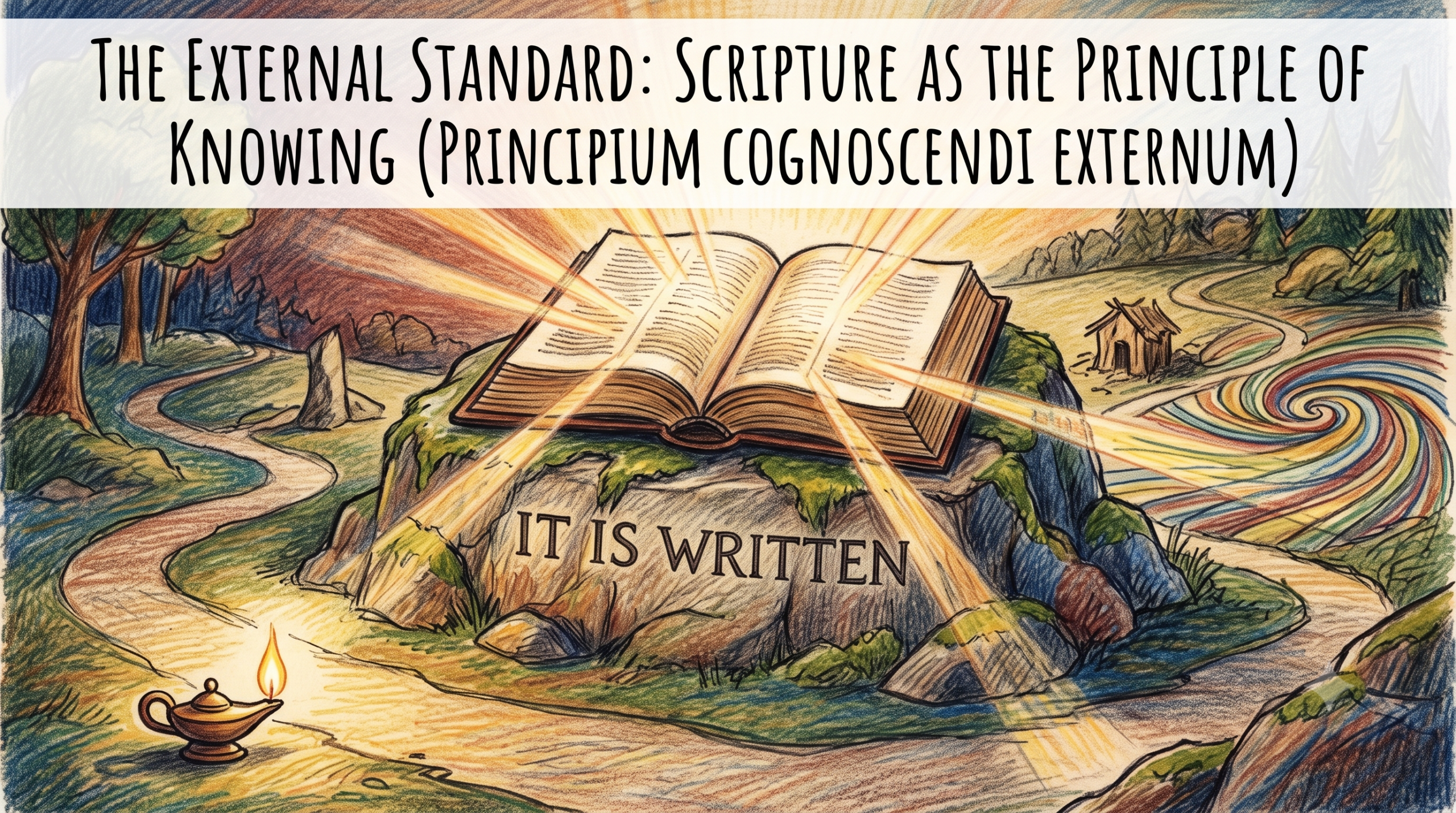
We live in an age drowning in subjectivity. In our post-truth culture, authority has been radically internalized. Truth is no longer viewed as an objective reality to be discovered and submitted to, but as a personal, fluid sentiment to be felt, constructed, and asserted. The ultimate virtue of our secular moment is “living your truth,”… Continue reading The External Standard: Scripture as the Principle of Knowing (Principium Cognoscendi Externum)
Category: Systematic Theology
The Essential Principle: God as the Foundation of Being (Principium Essendi)
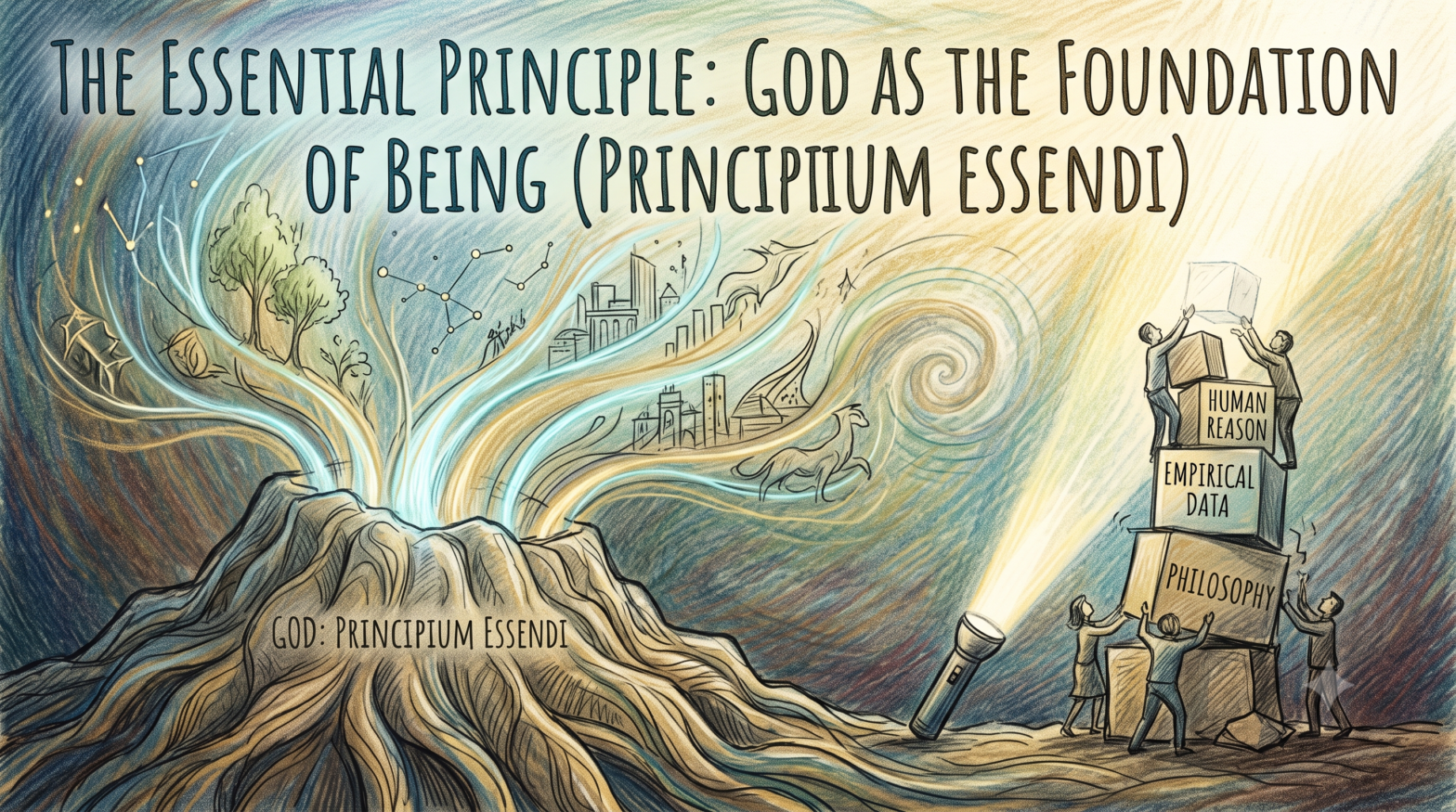
Since the Enlightenment, Western philosophy has been captive to a fatal epistemological inversion. Ever since René Descartes retreated into his private study and declared, “Cogito, ergo sum” (“I think, therefore I am”), modern culture has made the autonomous human mind the starting point for all reality. We begin with our own doubts, our own reason, and our… Continue reading The Essential Principle: God as the Foundation of Being (Principium Essendi)
The School of Precision: Reclaiming the Scholastic Method for Modern Theology
We live in an age that is deeply allergic to precision. Modern public discourse, heavily shaped by the rapid, emotional landscape of social media, values the hot take over the disciplined thought. We communicate in slogans, judge systems by their aesthetic appeal, and mistake emotional intensity for theological depth. In the contemporary church, this manifests… Continue reading The School of Precision: Reclaiming the Scholastic Method for Modern Theology
The Household of Faith: Doing Systematic Theology as Church Dogmatics
We live in an era that worships the autonomous self. From our personalized social media algorithms to our “build-your-own” spirituality, the modern West is deeply committed to the myth of the self-made man. We are told that true authenticity requires us to shed the baggage of the past, reject institutional authority, and discover our own… Continue reading The Household of Faith: Doing Systematic Theology as Church Dogmatics
The Infinite Gulf: The Creator-Creature Distinction and the Limits of Human Knowledge
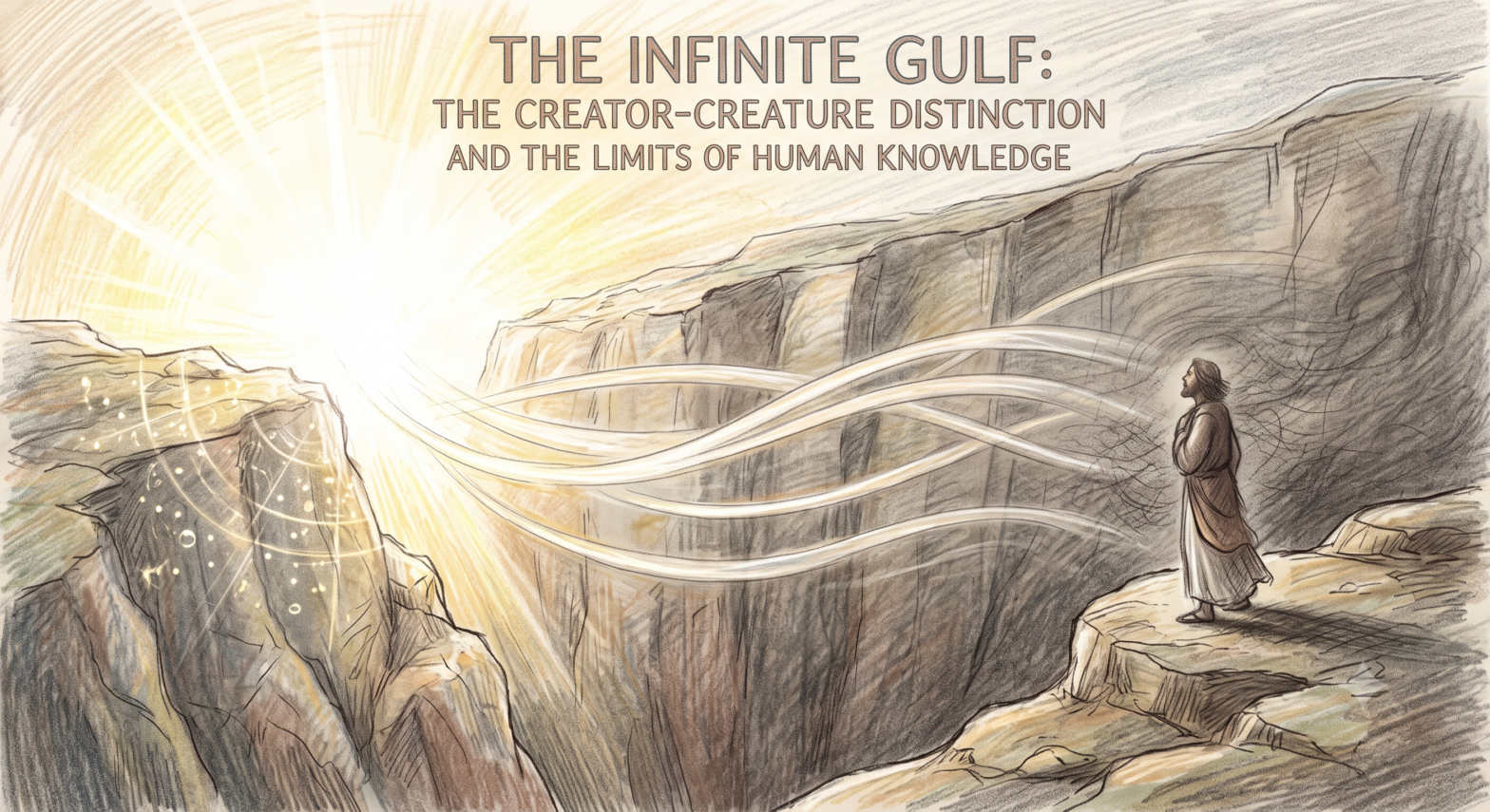
We live in an age that hates boundaries. Modern philosophy, secular psychology, and even much of contemporary Christian spirituality are deeply committed to flattening the cosmos. We are told that the divine is a force we can tap into, that the universe is an extension of our own consciousness, or that God is essentially a… Continue reading The Infinite Gulf: The Creator-Creature Distinction and the Limits of Human Knowledge
The Divine Goal: Theology Leads to God (Ad Deum Ducit)
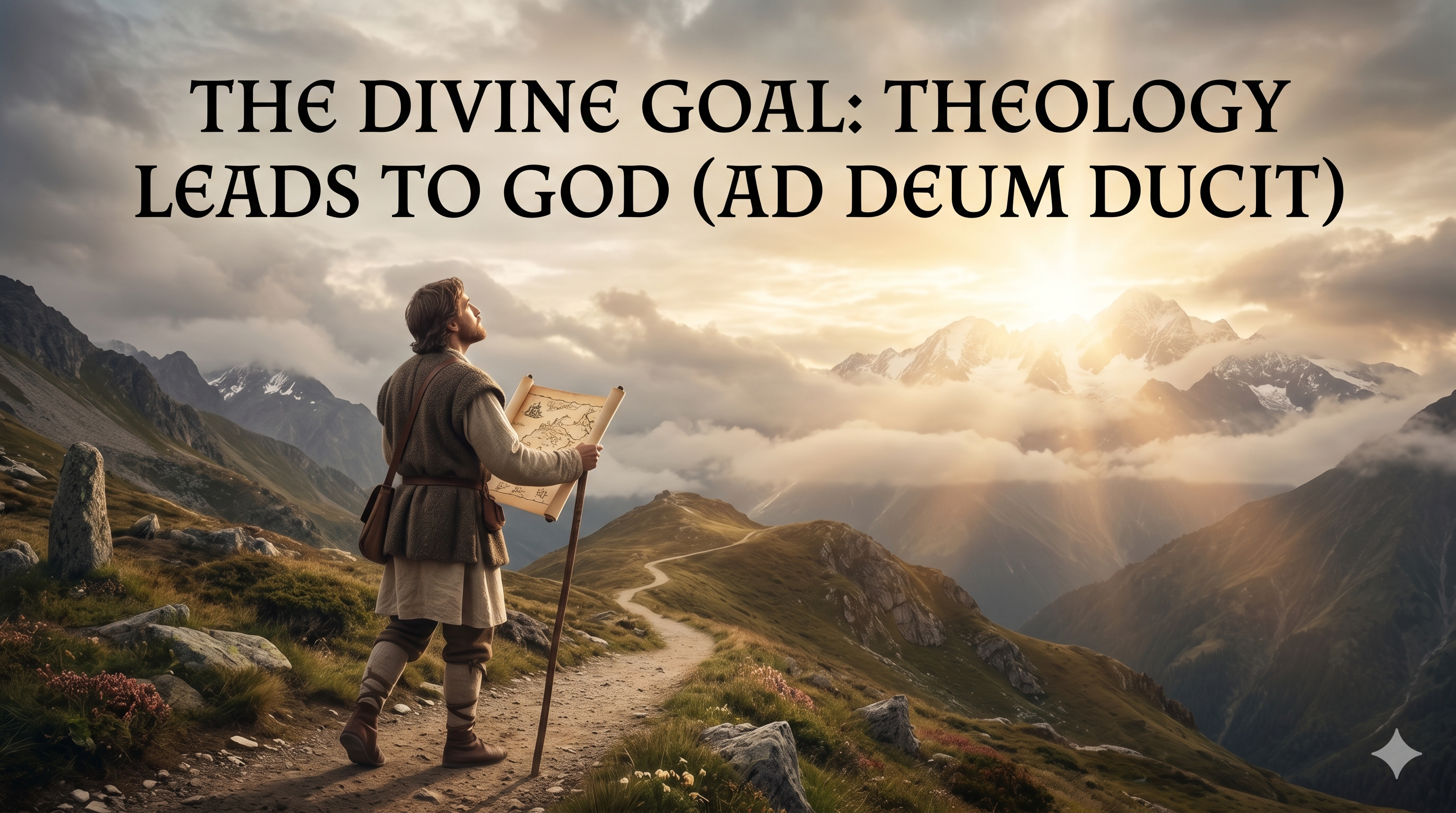
We live in an era characterized by a tragic divorce. In the modern church, we have allowed a devastating wall to be erected between the mind and the heart, between the study of doctrine and the pursuit of holiness. On one side of this wall stands a cold, detached academicism that treats the deep things… Continue reading The Divine Goal: Theology Leads to God (Ad Deum Ducit)
The Divine Subject: Theology Teaches God (Deum Docet)
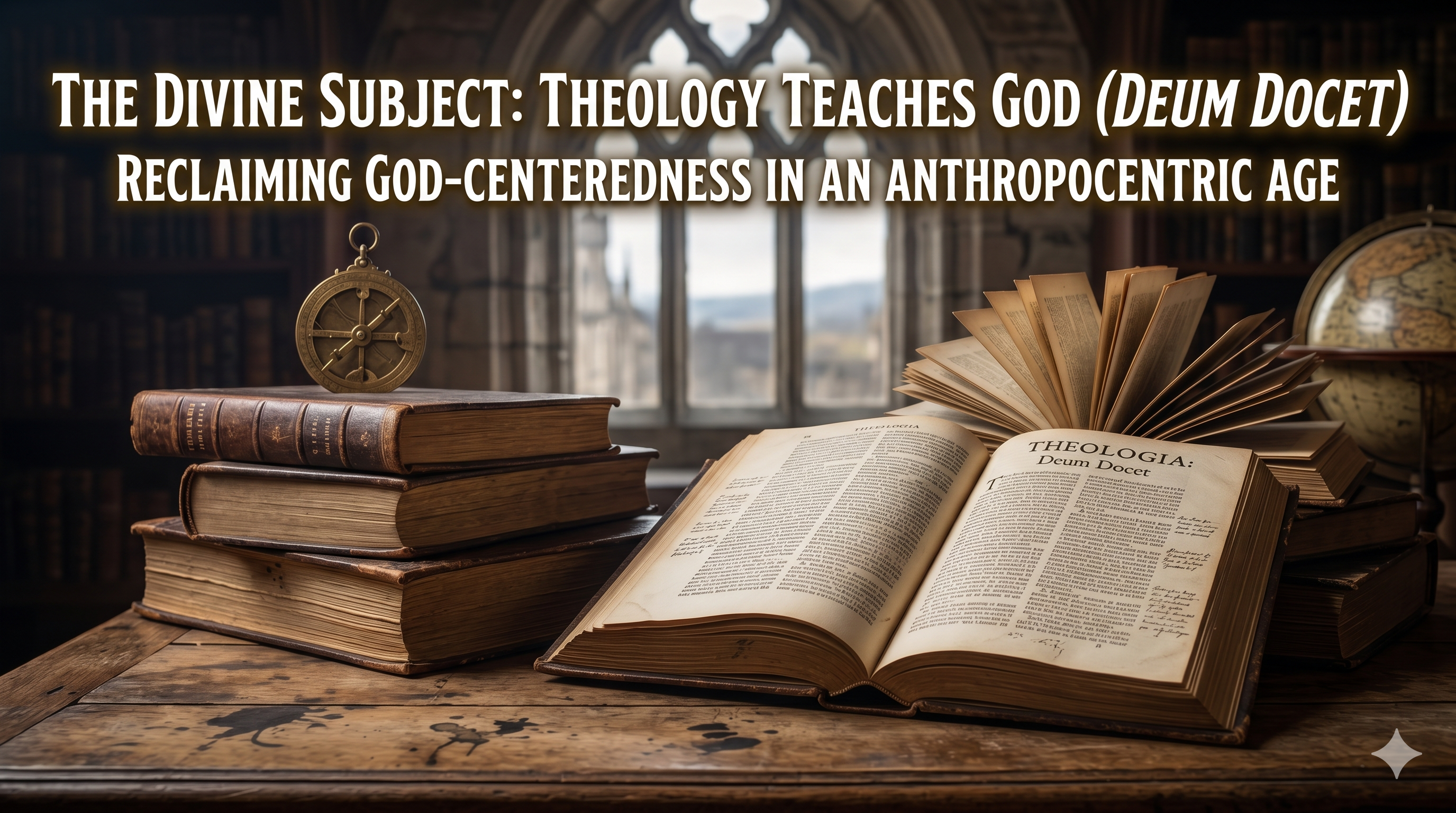
We live in an age of staggering self-absorption. If you walk into any secular bookstore—or, truth be told, almost any Christian boutique—the shelves groan under the weight of books dedicated to the self. We are obsessed with our personalities, our trauma, our productivity, our potential, and our platform. Even within the church, the gravity of… Continue reading The Divine Subject: Theology Teaches God (Deum Docet)
The Divine School: Theology as Taught by God (Theologia a Deo Docetur)
In our quest for knowledge, we are an ambitious species. We build massive libraries, launch satellites into the deep expanse of space, and split atoms to peer into the very fabric of material reality. In the secular academy, we treat every subject as something to be mastered, dissected, and cataloged by the power of human… Continue reading The Divine School: Theology as Taught by God (Theologia a Deo Docetur)
The Unseen Christ: On the Prohibition of Images
In our study of Chapter 21, we examined the Regulative Principle of Worship—the biblical rule that we may only worship God in the ways He has explicitly instituted in His Word. This principle is the direct application of the Second Commandment. While the First Commandment tells us who to worship (God alone), the Second Commandment tells us how to worship… Continue reading The Unseen Christ: On the Prohibition of Images
A Godly Sorrow: On Repentance Unto Life (WCF 15.1–15.6)

In the previous chapter, we examined Saving Faith—the hand that reaches out to rest on Christ alone. But the Bible rarely speaks of faith in isolation. Jesus began His ministry with a dual command: “Repent and believe in the gospel” (Mark 1:15). Faith and repentance are the twin graces of conversion. You cannot turn toward Christ without… Continue reading A Godly Sorrow: On Repentance Unto Life (WCF 15.1–15.6)