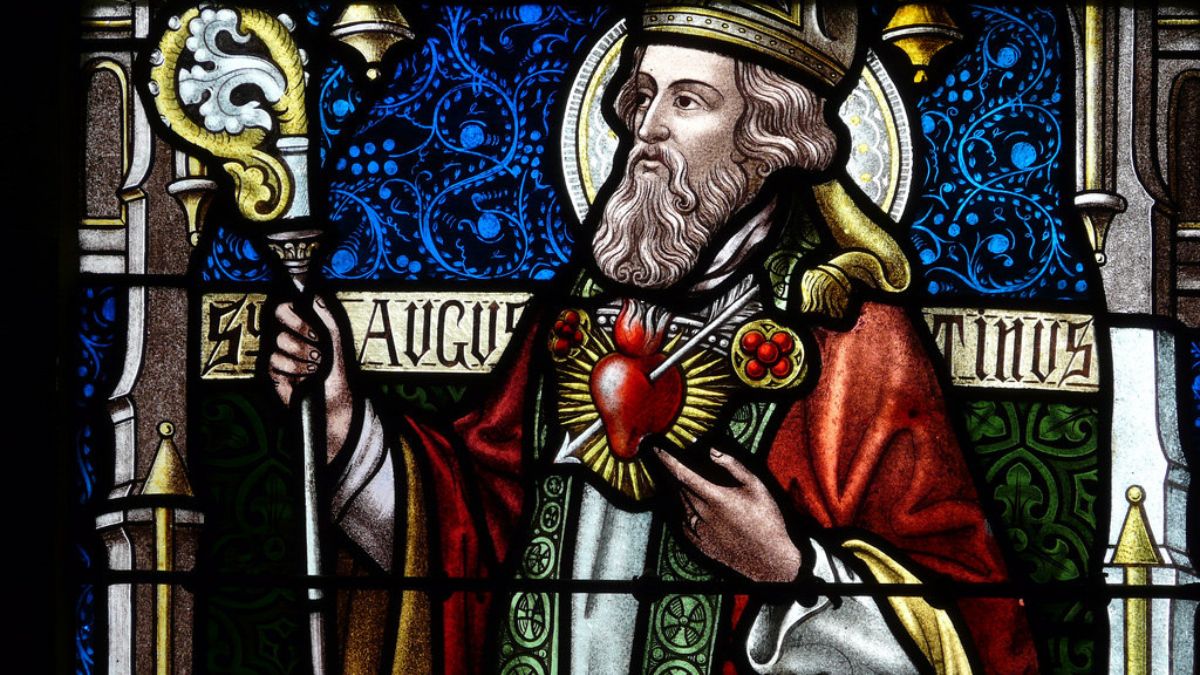
In Part 1, we established the high stakes of historical revisionism and the problematic methodology employed by Owen Strachan and others in the ERAS camp.[1] Now, we turn to the first of Strachan’s alleged witnesses: Augustine of Hippo. Strachan’s citation of Augustine is particularly significant because it appeals to the “Later Augustine.” By citing Answer to Maximinus… Continue reading Augustine and the “Hence” That Changes Everything
Drawn by the Father: On Effectual Calling (WCF 10.1–10.4)

In Chapter 9, we faced the grim reality of the human condition: fallen man possesses a “natural liberty,” but is in moral bondage, “dead in sin” and “altogether averse” to spiritual good. This leaves us with a desperate question: How can a corpse walk? How can a will bound by sin ever choose a holy… Continue reading Drawn by the Father: On Effectual Calling (WCF 10.1–10.4)
From One Man, Many Nations: A Theological Reading of the Table of Nations (Gen. 10:1–32)
Loved ones, if you are reading through the Bible sequentially, you have just hit your first major speed bump. After the dramatic narratives of the Flood and the shameful incident in Noah’s tent, Genesis 10 presents us with a long list of names—seventy of them, to be precise. It is a directory of ancient tribes,… Continue reading From One Man, Many Nations: A Theological Reading of the Table of Nations (Gen. 10:1–32)
Living According to Nature, Created and Redeemed
We have spent the last few articles in the “gymnasium” of Christian Stoicism, learning to wield specific tools: the Dichotomy of Control to steady our hands and the Ordered Affections to steady our hearts. We have seen that the Christian life is not a retreat from reality, but a disciplined engagement with it, fueled by the Spirit and grounded… Continue reading Living According to Nature, Created and Redeemed
The High Cost of Historical Revisionism

The summer of 2016 was a strange season for the evangelical internet. For a few heated months, the blogosphere—usually preoccupied with cultural hot takes or political infighting—became an impromptu lecture hall for Patristic theology. The debate concerned the Trinity, specifically the doctrine of Eternal Functional Subordination (EFS), later rebranded as Eternal Relations of Authority and Submission (ERAS). At stake was a… Continue reading The High Cost of Historical Revisionism
A Will in Bondage: On the Nature of Human Freedom (WCF 9.1–9.5)

We have traversed the high peaks of Christology in Chapter 8, beholding the Person and Work of the Mediator. Now, the Confession turns its gaze inward to the human condition. If Christ has purchased redemption, how do we receive it? Can we simply choose to follow Him by our own natural power? The subject of… Continue reading A Will in Bondage: On the Nature of Human Freedom (WCF 9.1–9.5)
The Shame of the Patriarch: Sin and Prophecy in Noah’s Tent (Gen. 9:18–29)

Loved ones, we have spent several weeks looking at Noah as a hero of the faith. We saw him stand alone as a righteous man in a violent generation. We saw him build the Ark in obedient silence. We saw him offer a pleasing sacrifice that established a covenant of peace for the entire world.… Continue reading The Shame of the Patriarch: Sin and Prophecy in Noah’s Tent (Gen. 9:18–29)
Apatheia or Ordered Affections? A Christian View of Emotion
In our last article, we walked through the forest of virtue. We saw that the Stoic “stumps” of Wisdom, Justice, Courage, and Temperance are noble but dead until they are grafted into the living root of the Holy Spirit and watered by Faith, Hope, and Love. Now we must descend from the high ground of… Continue reading Apatheia or Ordered Affections? A Christian View of Emotion
Topic 1, Question 2: Whether there is a theology and its divisions
We established in our previous article that “theology” is a valid and necessary word. It is the label we put on the box containing the truth about God. But a label is one thing; the contents are another. A skeptical man might look at the thousands of years of church history, the endless shelves of… Continue reading Topic 1, Question 2: Whether there is a theology and its divisions
The Work of Redemption: On the Office of Christ the Mediator (WCF 8.5–8.8)

In the first half of Chapter 8, we beheld the person of Christ: the God-Man, divinely appointed and equipped for the work of mediation. But a mediator is not appointed merely to be something, but to do something. Who is He, and what did He accomplish? Having established His identity, the Westminster divines now turn to the efficacy, scope,… Continue reading The Work of Redemption: On the Office of Christ the Mediator (WCF 8.5–8.8)